In this article
- MQTT QoS levels determine message delivery reliability between clients and broker systems
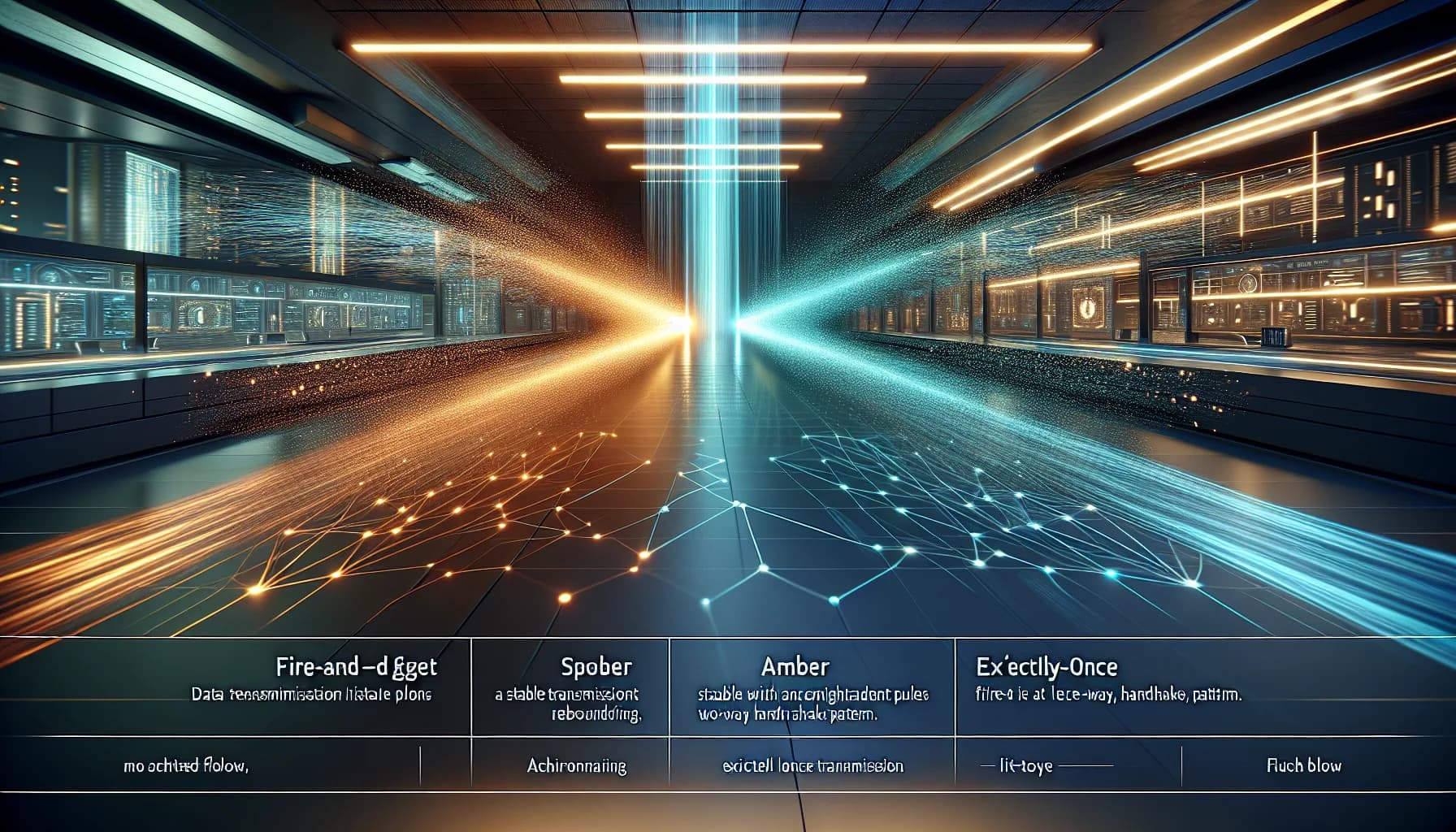
- QoS 0 provides "fire and forget" delivery with minimal overhead but no guarantees
- QoS 1 ensures at-least-once delivery with acknowledgments but allows potential duplicates
- QoS 2 provides exactly-once delivery with four-way handshake for mission-critical applications
- Higher QoS levels increase reliability but consume more bandwidth and processing power
- Selecting the right QoS level depends on application requirements, network conditions, and resource constraints
MQTT (Message Queuing Telemetry Transport) uses three different quality of service levels. These levels control message delivery between clients and brokers. Each QoS level offers different trade-offs between reliability, performance, and resource use.
The MQTT protocol uses these QoS methods to help applications handle different network conditions and reliability needs. Some sensor readings can handle occasional message loss. Critical control commands require guaranteed delivery. MQTT QoS levels provide the flexibility needed for various IoT setups.
This guide shows how each QoS level works. We'll explain when to use specific levels and the technical methods that ensure reliable message delivery in MQTT systems.
- MQTT QoS Fundamentals
- QoS Level 0: Fire and Forget
- QoS Level 1: At Least Once Delivery
- QoS Level 2: Exactly Once Delivery
- Choosing the Right QoS Level
- MQTT Broker QoS Handling
- QoS Performance Considerations
MQTT QoS Fundamentals
MQTT QoS defines the level of delivery guarantee for messages. These messages travel between an MQTT client and broker. The protocol has three different QoS levels. Each level provides different reliability features and resource needs.
When an MQTT client publishes a message, it sets a QoS level. This level tells the broker how to handle message delivery. The broker then uses this QoS level to ensure proper delivery to subscribing clients. This system lets MQTT applications balance reliability against performance based on specific needs.
The three quality of service levels work separately for each message. A single MQTT session can use different QoS levels for different messages. This allows fine control over delivery needs. The broker keeps separate handling procedures for each QoS level to ensure proper message delivery.
Message Flow Control
Each QoS level uses specific acknowledgment patterns between MQTT clients and the broker. QoS 0 needs no acknowledgments. QoS 1 uses a single acknowledgment. QoS 2 uses a four-way handshake to ensure the message is delivered exactly once without duplicates.
The broker stores messages based on their QoS level needs. Higher QoS levels need persistent storage to handle client disconnections and network failures. This storage system ensures the broker can complete message delivery even when network conditions are unreliable.
QoS Level 0: Fire and Forget
QoS 0 represents the lowest level of service in MQTT. It works on a "fire and forget" basis. When a message is sent with QoS 0, neither the sender nor the broker provides delivery guarantees. The message travels from publisher to broker to subscriber without acknowledgments or retry attempts.
This level 0 approach reduces network overhead and processing needs. The MQTT client sends the message once. The broker forwards it to subscribers without waiting for confirmations. If network issues cause message loss, neither the client nor broker tries to recover.
QoS 0 works well for applications where occasional message loss is fine. Sensor data that updates often, such as temperature readings every few seconds, can handle missed messages. Newer data quickly replaces lost information.
Technical Implementation
The broker handles QoS 0 messages with minimal processing overhead. When it receives a message, the broker immediately forwards it to active subscribers. It doesn't store the message for later delivery. Offline subscribers miss QoS 0 messages entirely. The broker doesn't keep message queues for this QoS level.
Network packet loss directly affects QoS 0 message delivery. TCP provides some reliability at the transport layer. But application-layer failures can still result in message loss. The MQTT protocol makes no attempt to recover from such failures when using the lowest QoS level.
QoS Level 1: At Least Once Delivery
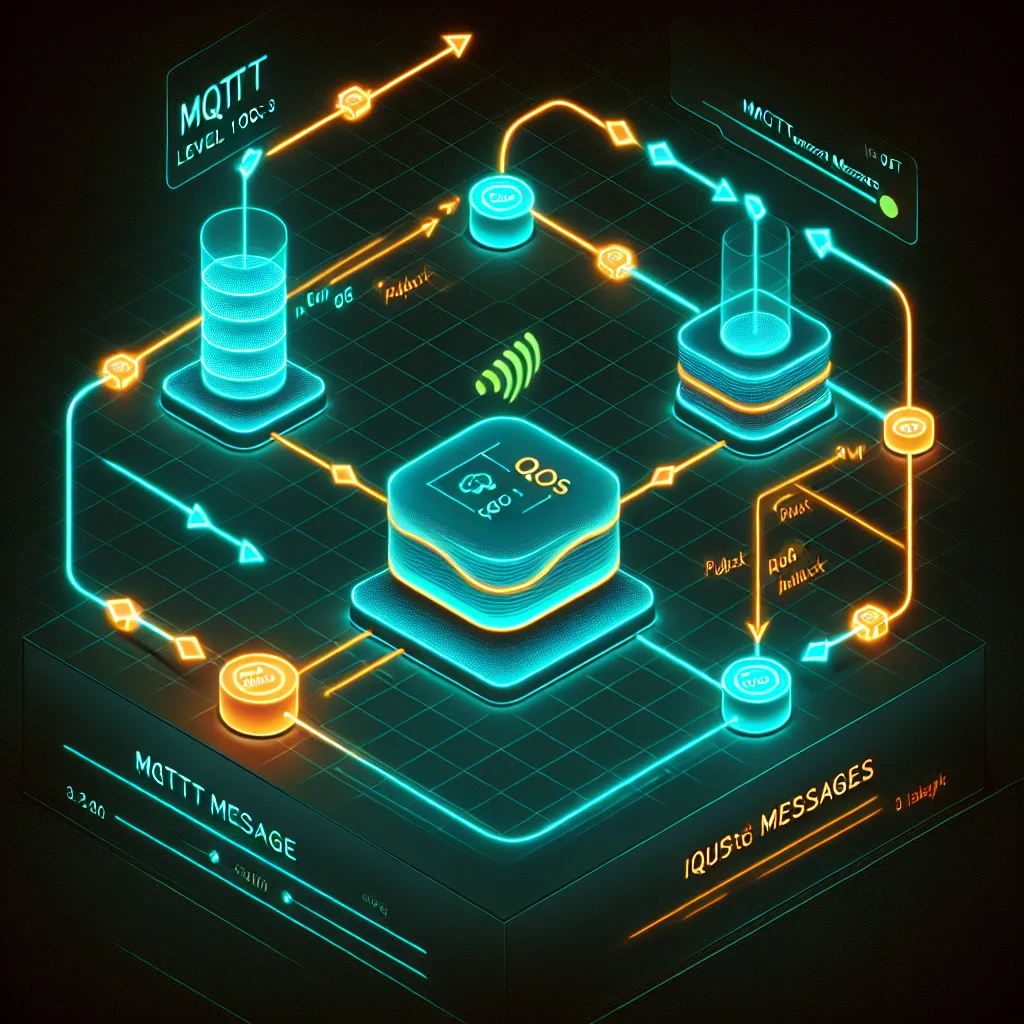
QoS 1 ensures messages reach their destination at least once. It uses an acknowledgment system. When an MQTT client publishes with QoS 1, the broker sends a PUBACK acknowledgment after receiving the message. If the client doesn't receive this acknowledgment within a timeout period, it resends the message.
This QoS level 1 method guarantees message delivery but may result in duplicate messages. Network delays or acknowledgment packet loss can trigger message retransmission. This can happen even when the original message reached the broker successfully. Applications using QoS 1 must handle potential duplicates properly.
QoS 1 ensures reliable delivery while keeping reasonable performance features. The single acknowledgment creates minimal extra network traffic compared to QoS 0. This makes it suitable for applications needing delivery guarantees without the overhead of exactly-once delivery.
Acknowledgment Process
The broker processes QoS 1 messages by sending immediate PUBACK responses to publishing clients. This acknowledgment confirms the broker received the message and will try delivery to subscribers. The publisher considers the message successfully delivered once it receives the PUBACK.
For subscribers, the broker keeps message queues to handle offline clients. When a subscriber reconnects, the broker delivers queued QoS 1 messages. It expects PUBACK acknowledgments from the subscriber. This process ensures the message is delivered to the subscriber application.
Duplicate detection becomes the application's job with QoS 1. The MQTT protocol includes a duplicate flag in message headers. But applications must create their own logic to handle repeated messages properly based on business needs.
QoS Level 2: Exactly Once Delivery
QoS 2 provides the highest level of service. It ensures the message is delivered exactly once with no duplicates. This QoS level uses a four-way handshake between publisher, broker, and subscriber. This guarantees exactly-once delivery.
The four-way handshake involves PUBLISH, PUBREC, PUBREL, and PUBCOMP messages. When a client publishes with QoS 2, the broker responds with PUBREC. The client then sends PUBREL. The broker completes the sequence with PUBCOMP. This process ensures both parties agree the message was delivered exactly once.
Using QoS 2 eliminates duplicate messages entirely but adds significant overhead. The multiple message exchanges and needed state management make QoS 2 the most resource-intensive option. Applications should save this QoS level for scenarios where duplicates could cause serious problems.
Four-Way Handshake Details
The broker manages complex state information for QoS 2 transactions. Each message needs tracking through multiple phases to ensure proper completion. If any step in the handshake fails, the broker must keep transaction state until successful completion or timeout.
QoS 2 needs persistent storage at both client and broker to handle network failures during the handshake process. This storage ensures transaction completion even if connections are lost partway through the delivery process. The extra storage and processing needs make QoS 2 the most expensive option in terms of resources.
Message delivery speed decreases significantly with QoS 2 due to the multiple round trips needed. Applications using this highest level of service must account for increased delay compared to lower QoS levels. This is especially true over high-latency networks.
Choosing the Right QoS Level
Selecting the right QoS level requires balancing reliability needs against performance and resource limits. Applications must consider network conditions, message importance, processing capabilities, and acceptable delivery methods when choosing between different QoS levels.
QoS 0 suits applications where speed matters more than guaranteed delivery. Streaming telemetry data, real-time sensor readings, and status updates often work well with QoS 0. Newer messages quickly replace older ones. The minimal overhead makes QoS 0 ideal for high-frequency, low-importance messages.
QoS 1 or QoS 2 become necessary when message loss could impact system function. Configuration updates, alarm notifications, and control commands typically need delivery guarantees. The choice between QoS 1 and QoS 2 depends on whether the application can handle duplicate messages properly.
Application Scenarios
IoT sensor networks often use QoS 0 for regular data collection. Occasional missing readings don't significantly impact overall data quality. The lower QoS reduces battery use and network usage. This extends device operational life in resource-limited environments.
Industrial control systems typically need higher QoS levels for critical operations. Emergency shutdown commands or safety alerts must reach their destinations reliably. This makes QoS 1 ensure delivery even under challenging network conditions. Financial or inventory applications might need QoS 2 to prevent duplicate transactions.
Mobile applications face varying network conditions that influence QoS selection. Stable WiFi connections can handle any QoS level effectively. Cellular networks with intermittent connectivity might benefit from higher QoS levels. This ensures important messages survive network disruptions.
MQTT Broker QoS Handling

The broker plays a central role in implementing MQTT QoS guarantees across all client connections. Different QoS levels need varying broker capabilities. These range from simple message forwarding to complex state management and persistent storage.
For QoS 0 messages, the broker operates as a simple relay. It forwards messages to active subscribers without acknowledgments or storage. This lightweight approach reduces broker resource usage. But it provides no delivery guarantees for offline clients.
QoS 1 needs the broker to maintain message queues for offline subscribers. It also tracks acknowledgments from both publishers and subscribers. The broker must store messages until successful delivery confirmation. This increases memory and storage needs compared to QoS 0.
Storage Requirements
QoS 2 demands the most sophisticated broker implementation. It needs persistent state management for the four-way handshake protocol. The broker must track each message through multiple phases. It must maintain transaction consistency across client disconnections and reconnections.
Broker scaling considerations vary significantly between QoS levels. QoS 0 allows nearly unlimited throughput since messages don't need persistent storage. Higher QoS levels create bottlenecks through storage I/O and state management overhead. This limits maximum message rates.
Enterprise messaging platforms implement advanced features like message persistence, clustering, and failover. These ensure reliable QoS handling at scale. These features become critical when supporting large numbers of clients with higher QoS needs across distributed systems.
QoS Performance Considerations
Each QoS level creates different performance features that impact overall system behavior. Applications must understand these trade-offs to make informed decisions about message delivery needs and system capacity planning.
Network bandwidth consumption increases with higher QoS levels due to extra acknowledgment messages. QoS 0 uses minimal bandwidth since messages travel in one direction only. QoS 1 roughly doubles bandwidth usage with acknowledgments. QoS 2 can increase usage by 4x due to the complete handshake sequence.
Latency also varies significantly between QoS levels. QoS 0 provides the lowest latency since messages travel directly from publisher to subscriber. QoS 1 adds one round-trip time for acknowledgments. QoS 2 needs multiple round trips, substantially increasing end-to-end message delivery time.
Resource Utilization
Memory usage patterns differ dramatically across QoS levels. QoS 0 needs minimal memory since messages don't persist in broker storage. QoS 1 needs message queuing for offline subscribers. QoS 2 needs complex state tracking that can consume significant memory resources.
CPU utilization scales with QoS complexity and message volume. QoS 0 processing involves simple message forwarding with minimal computational overhead. Higher QoS levels need acknowledgment processing, timeout management, and state machine operations. These increase CPU needs per message.
Battery life in IoT devices becomes a critical consideration when choosing QoS levels. Lower QoS levels consume less power through reduced network activity and simpler processing needs. Applications targeting battery-powered devices should carefully evaluate whether higher QoS levels justify the extra power consumption.
Practical QoS Implementation
Industrial applications select mqtt quality of service levels based on data criticality. Critical control systems need QoS 2. Sensor data collection often uses mqtt qos 0 for efficiency. Each application uses qos differently based on tolerance for message loss and network bandwidth limits.
Understanding mqtt implementation helps developers evaluate how each level affects system performance and reliability. This mqtt qos levels explained approach guides decision-making about message delivery guarantees. The three levels of reliability provide flexible options for different use cases within the same MQTT deployment.
MQTT Topics and QoS Configuration
MQTT topics can be configured with different qos in mqtt settings to optimize performance across various data streams. Publishers might send temperature readings to a topic with qos 0 and 1 for different subscriber needs. The basics of mqtt include understanding that QoS 2 explained demonstrates exactly-once delivery through a four-step handshake process.
Among the key features of mqtt, the three levels in mqtt provide granular control over message delivery methods. MQTT defines specific protocols for each QoS level. This ensures consistent behavior across different messaging implementations. A message with qos 1 needs acknowledgment from the broker. A topic with qos 2 guarantees exactly-once delivery through duplicate detection.
Understanding that qos 2 is the highest level of service available helps developers build robust IoT systems. Since 2 is the highest level of reliability, it consumes more bandwidth and processing power than lower QoS levels. This qos guide emphasizes balancing reliability needs with system resources for optimal MQTT deployment.
The three levels of qos in MQTT provide developers with precise control over message delivery reliability. The final qos level for any message exchange is determined by the lower of the two QoS levels specified by the publisher and subscriber. Understanding how mqtt control packets flow between clients and brokers is essential for implementing reliable IoT communication systems.
When examining QoS 2 implementation details, the qos 2 publish packet starts a four-step handshake process with the broker. This packet type is used for qos 1 acknowledgment scenarios but needs extra confirmation steps in QoS 2. The appropriate qos level depends on your application's tolerance for message loss and the criticality of the data being transmitted.
QoS Level Selection Strategies
Selecting qos 0 for non-critical telemetry data like temperature readings optimizes network bandwidth and reduces processing overhead. However, qos 2 ensures exactly-once delivery for mission-critical commands that cannot be duplicated or lost. The overall qos performance of your system depends on balancing reliability needs with network limits.
Determining which qos to use needs careful analysis of your specific use case and network conditions. While levels 0 and 1 offer simpler implementation paths, the qos 2 flow provides guaranteed message delivery through its complex acknowledgment sequence. Most mqtt implementations support all three QoS levels. However, performance features vary significantly between them.
MQTT Client Library Integration
Popular libraries like the paho mqtt client provide straightforward methods for setting QoS levels during message publication and subscription. Any mqtt client library worth implementing should handle the underlying protocol complexities. It should expose simple QoS configuration options. When configuring your messaging system with qos 2 support, ensure your infrastructure can handle the extra overhead of the four-way handshake process.
The mqtt standard specifies that qos 2 must guarantee exactly-once delivery through its PUBLISH-PUBREC-PUBREL-PUBCOMP sequence. Proper use of qos levels enhances mqtt communication reliability while maintaining optimal performance for your specific application needs.
When publishers set QoS to 0, they prioritize speed and efficiency over delivery guarantees. QoS 0 means that messages are sent once without acknowledgment. This makes it ideal for scenarios where occasional message loss is acceptable. This fire-and-forget approach works well for frequent sensor readings or real-time data streams. In these cases, the latest value matters more than every individual transmission.
Setting QoS to 1 ensures that the message reaches its destination at least once through acknowledgment systems. When QoS is set to 1, the broker responds with a PUBACK message to confirm receipt. This level may result in duplicate messages during network interruptions. Industrial applications often use this level when message delivery is critical but occasional duplicates can be handled by the receiving application.
QoS 2 in MQTT provides the highest level of reliability through a four-step handshake protocol that guarantees exactly-once delivery. This level eliminates both message loss and duplication but needs extra network overhead and processing time. Financial transactions, critical alarms, and command-and-control systems typically need QoS 2 to ensure data integrity.
QoS Selection Best Practices
Selecting the right MQTT QoS level depends on your specific use case, network reliability, and performance needs. QoS ensures proper message delivery behavior while balancing network resources and application needs. Consider factors such as message frequency, network stability, and the consequences of message loss when making this decision.
The MQTT last will and testament feature works independently of QoS levels but follows the same delivery guarantees as regular messages. When a client disconnects unexpectedly, the broker publishes the last will message using the specified QoS level to notify other clients of the disconnection. This mechanism proves essential for device monitoring and failover scenarios in industrial IoT deployments.
Frequently Asked Questions
What happens when an MQTT client goes offline during message delivery?
When an MQTT client disconnects, the broker handles messages differently based on QoS level. QoS 0 messages are lost immediately since the broker doesn't store them. QoS 1 and QoS 2 messages remain queued at the broker until the client reconnects. This ensures message delivery despite temporary disconnections.
Can I use different QoS levels for publishing and subscribing?
Yes, MQTT allows independent QoS selection for publishing and subscribing operations. The effective QoS level becomes the minimum of the publisher's QoS and the subscriber's maximum QoS level. This flexibility allows clients to specify their delivery needs independently while maintaining protocol compatibility.
How does the broker ensure QoS 2 messages avoid duplicates?
The broker uses a four-way handshake protocol for QoS 2 that tracks message state through multiple phases. This process ensures both sender and receiver agree on message delivery status. The broker maintains persistent state information to complete transactions even across connection failures. This prevents duplicate delivery.
What factors should I consider when selecting a QoS level?
Key factors include message importance, network reliability, bandwidth limits, processing capabilities, and duplicate tolerance. Critical messages needing guaranteed delivery need QoS 1 or QoS 2. High-frequency sensor data often works well with QoS 0. Consider the trade-offs between reliability and performance based on your specific application needs.
Do MQTT retained messages work with all QoS levels?
Yes, MQTT retained messages work with all QoS levels. The broker stores the last retained message for each topic and delivers it to new subscribers using the same QoS level specified by the original publisher. This system ensures new subscribers receive the most recent value regardless of when they connect to the broker.
How do higher QoS levels affect MQTT broker performance?
Higher QoS levels significantly impact broker performance through increased storage needs, acknowledgment processing, and state management overhead. QoS 0 allows maximum throughput with minimal resources. QoS 2 can reduce message throughput by 75% or more due to the complex handshake needs and persistent storage requirements.
Which level of qos should I choose for my IoT sensors?
The choice depends on your data criticality and network conditions. Use mqtt qos 0 for high-frequency sensor data where occasional loss is acceptable, such as temperature readings every few seconds. For critical alerts or actuator commands, mqtt quality of service level 1 or 2 ensures reliable delivery.
How does each mqtt message handle delivery confirmation?
Each mqtt qos levels explained differently - QoS 0 sends without confirmation, QoS 1 waits for acknowledgment, and qos 2 explained involves a four-part handshake. When you use mqtt with higher QoS levels, expect increased network overhead but improved reliability. The features of mqtt include automatic retry mechanisms for failed deliveries at levels 1 and 2.
Can different mqtt topics use different QoS settings simultaneously?
Yes, you can configure different levels of reliability for various mqtt topics within the same messaging connection. Understanding qos in mqtt allows you to optimize each data stream independently. You can use QoS 0 and 1 for different topics based on their importance. The basics of mqtt include this flexibility to mix QoS levels according to your application needs.
What makes a message with qos 1 different from QoS 2?
A message with qos 1 guarantees at-least-once delivery but may create duplicates. A topic with qos 2 prevents duplication through packet identification. Since qos 2 is the highest level available, it uses more bandwidth than QoS 1 but eliminates duplicate messages entirely. This qos guide helps you choose between guaranteed delivery (QoS 1) and exactly-once delivery (QoS 2).
How do I determine which QoS level to use for my MQTT application?
The appropriate qos level depends on your application's criticality and network reliability needs. Use qos 0 for non-critical sensor data where occasional message loss is acceptable. Use qos 2 to ensure exactly-once delivery for critical control commands. Consider your network bandwidth and processing capabilities when selecting the final qos level.
What happens during the QoS 2 message flow?
The qos 2 flow involves a four-step handshake starting with a qos 2 publish packet from the client to the broker. This process includes PUBLISH, PUBREC, PUBREL, and PUBCOMP mqtt control packets to guarantee exactly-once delivery. The mqtt standard requires that qos 2 must complete this entire sequence before considering the message successfully delivered.
Can I mix different QoS levels within the same MQTT session?
Yes, most mqtt implementations allow you to specify different QoS levels for individual messages within the same session. Libraries like the paho mqtt client enable you to set the qos to use on a per-message basis during publication. The overall qos for mqtt communication can vary based on each topic's specific reliability needs.
How do QoS levels 0 and 1 differ from QoS 2?
While levels 0 and 1 use simpler acknowledgment systems, QoS 2 needs a complex four-way handshake protocol. A messaging system with qos 2 support must track message state throughout the entire exchange process. Any mqtt client library implementing QoS 2 must handle significantly more protocol overhead compared to the straightforward approach used for qos 1 acknowledgments.
What happens when QoS is set to 1 and the network connection is unstable?
When QoS is set to 1 during network instability, the publisher may not receive the PUBACK acknowledgment within the timeout period. QoS 1 ensures that the message will be retransmitted until acknowledgment is received. But this can result in duplicate messages reaching subscribers. Applications must handle potential duplicates when using this QoS level.
Why would someone choose QoS 0 for their MQTT implementation?
QoS 0 means minimal network overhead and maximum throughput. This makes it perfect for high-frequency data streams like sensor readings. When messages are frequent and losing occasional data points doesn't impact the overall system, setting QoS to 0 provides the best performance. This level works well for temperature monitoring or GPS tracking where the next reading compensates for any lost data.
How does QoS 2 in MQTT handle message duplicates compared to other levels?
QoS 2 in MQTT eliminates message duplicates through a four-step handshake process. This involves PUBLISH, PUBREC, PUBREL, and PUBCOMP messages. The right MQTT QoS level for critical applications often needs this exactly-once delivery guarantee. QoS ensures that subscribers receive each message precisely once. This makes it essential for financial transactions or device configuration updates.
Can I mix different QoS levels within the same MQTT application?
Yes, different topics and message types can use different QoS levels based on their importance and delivery needs. For example, sensor data might use QoS 0 for efficiency while command messages use QoS 2 for reliability. The MQTT last will message can also have its own QoS level, independent of the regular messages published by that client.
Understanding MQTT QoS levels enables developers to build robust IoT systems that balance reliability with performance. Choose QoS 0 for high-frequency, non-critical data where speed matters most. Use QoS 1 when you need delivery guarantees but can handle occasional duplicates. Reserve QoS 2 for mission-critical messages where exactly-once delivery is essential. The right QoS level selection ensures your MQTT applications meet reliability needs while optimizing resource use across your entire IoT infrastructure.
Related Articles
How MQTT Brokers Work: Architecture and Best Practices
Message brokers function as the central communication hub in IoT architecture. They manage message routing between connected devices through a publish-s...
OPC UA for Industrial M2M Communication
Manufacturing operations need strong communication protocols. These protocols connect old systems with new IoT infrastructure. OPC UA for industrial m2m...
WebSocket vs MQTT vs CoAP: Choosing the Best Protocol
Selecting the right communication protocol can make or break your IoT project. Choosing between MQTT, CoAP, and real-time protocols means understanding ...