
In this article
- Message brokers serve as intermediaries that receive, filter, and distribute messages between IoT devices using a publish-subscribe architecture
- Modern broker architecture includes core components like connection management, topic routing, message queuing, and authentication systems
- Industrial IoT deployments require brokers that handle high-availability clustering, security protocols, and scalable message delivery mechanisms
- Open source solutions like leading messaging platforms provide robust foundations for custom IoT applications while supporting standard protocol features
- Implementing best practices involves proper topic structure design, security configuration, performance monitoring, and failover strategies
- Choosing the right broker implementation depends on specific use case requirements including throughput, reliability, and integration capabilities
Message brokers function as the central communication hub in IoT architecture. They manage message routing between connected devices through a publish-subscribe model. The protocol has become the backbone of modern IoT deployments. This is because brokers provide efficient, lightweight communication. They scale from simple sensor networks to complex industrial IoT implementations.
The architecture of message brokers determines how well they handle client connections and process messages. It also affects how they maintain system reliability. Unlike traditional request-response systems, brokers work by separating message producers from consumers. This allows devices to publish data without knowing which systems will consume it. This flexibility makes the protocol ideal for distributed IoT environments. Devices in these environments frequently connect and disconnect.
Modern broker implementations must balance performance, security, and reliability. They also need to support diverse IoT applications. Whether you deploy a simple home automation system or manage thousands of industrial sensors, the underlying broker architecture directly impacts system performance and scalability.
- Message Broker Fundamentals
- Core Architecture Components
- Broker Implementations and Options
- IoT Use Cases and Applications
- Protocol Features and Capabilities
- Best Practices for Implementation
- Performance Optimization Strategies
Message Broker Fundamentals
Message brokers operate on a simple yet powerful principle. They receive messages from publishing clients and deliver them to subscribing clients. This delivery is based on topic filters. The broker serves as the central point where all communication flows. This makes it responsible for maintaining client connections and managing subscriptions. It also ensures message delivery according to specified Quality of Service (QoS) levels.
The publish-subscribe model removes the need for direct device-to-device communication. When a sensor publishes temperature data to the topic "factory/floor1/temperature", the broker receives this message. It then forwards the message to all clients subscribed to that topic or matching topic patterns. This separation allows IoT systems to scale efficiently. Each device doesn't need to know about every other device in the network.
Brokers maintain persistent connections with clients. This reduces the overhead of constantly establishing new connections. The protocol uses TCP as its underlying transport. This ensures reliable message delivery while keeping bandwidth requirements minimal. This efficiency makes it particularly suitable for IoT devices with limited processing power and network connectivity.
Message Routing and Topic Structure
The broker architecture revolves around hierarchical topic structures. These organize messages in a logical way. Topics use forward slashes as separators. This creates tree-like structures such as "building/floor2/room5/temperature". This organization allows subscribers to use wildcards to receive messages from multiple related topics at the same time.
Single-level wildcards (+) match one topic level. Multi-level wildcards (#) match multiple levels. For example, subscribing to "building/+/temperature" receives temperature data from all floors. Subscribing to "building/floor1/#" receives all messages from floor1 regardless of room or sensor type. The broker uses these patterns to route messages efficiently to interested subscribers.
Core Architecture Components
Modern message brokers consist of several key architectural components. These work together to provide reliable message routing and client management. The connection manager handles all client connections. It maintains session state and monitors connection health. When clients disconnect unexpectedly, the broker can detect this and clean up resources properly.
The message router forms the heart of the broker architecture. It examines incoming messages and determines which subscribers should receive them. This component maintains subscription databases and topic trees. This enables fast message routing even with thousands of active subscriptions. Efficient routing algorithms ensure that message delivery remains fast as the system scales.
Message queuing systems within the broker handle scenarios where subscribers are temporarily offline. They also handle cases where subscribers cannot process messages immediately. For QoS 1 and QoS 2 messages, the broker stores messages until successful delivery confirmation. This persistent storage ensures critical IoT data reaches its destination even if network connectivity is intermittent.
Authentication and Authorization Systems
Security components within the broker verify client identities. They also control access to specific topics. Authentication systems validate client credentials. Authorization mechanisms determine which topics each client can publish to or subscribe from. Industrial IoT deployments require detailed security controls to protect sensitive operational data.
The broker implementation typically includes integration points for external authentication systems. This allows organizations to use existing identity management infrastructure. Certificate-based authentication provides additional security layers. This is particularly important when IoT devices operate in untrusted network environments.
Session Management
Session persistence allows brokers to maintain client state across connections. It stores subscription information and queued messages for disconnected clients. The broker receives session configuration from clients during connection establishment. This determines whether to create clean sessions or restore previous state.
Persistent sessions enable mobile IoT devices to reconnect seamlessly after network interruptions. They receive any messages published while offline. This capability is crucial for applications where message loss could impact system functionality or safety.
Broker Implementations and Options

Leading open source messaging platforms represent widely deployed solutions. They provide lightweight yet feature-complete options suitable for many IoT applications. These platforms support all standard protocol features. This includes persistent sessions, retained messages, and all QoS levels. This makes them excellent choices for development and production deployments.
Open source brokers offer several advantages for IoT projects. These include transparent operation, active development communities, and freedom from vendor lock-in. Organizations can modify source code to meet specific requirements. They can also deploy brokers on their preferred infrastructure without licensing restrictions. The active development communities continuously improve functionality and security.
Commercial broker implementations typically provide additional enterprise features. These include clustering, advanced monitoring, and professional support. These solutions often include web-based management interfaces and detailed analytics. They also include integration with enterprise systems. Choosing between open source and commercial options depends on specific project requirements and available technical expertise.
Deployment Considerations
Broker deployment strategies vary based on IoT application requirements and infrastructure constraints. Single broker deployments work well for smaller systems. However, they create single points of failure. High-availability configurations use multiple brokers with clustering or load balancing. This ensures continuous operation even if individual broker instances fail.
Cloud-hosted brokers eliminate infrastructure management overhead. However, they may introduce latency or connectivity dependencies. On-premises deployments provide complete control over data and security. However, they require dedicated infrastructure and maintenance expertise. Hybrid approaches combine both strategies. They use local brokers for time-critical operations while synchronizing with cloud systems for analytics and management.
IoT Use Cases and Applications
Smart building systems represent a common use case where message brokers excel at managing diverse sensor networks and control systems. Building automation systems use brokers to collect data from HVAC sensors, lighting controllers, and security systems. They also distribute control commands to actuators and displays. The hierarchical topic structure naturally maps to building layouts. Topics like "building1/floor3/hvac/temperature" provide logical organization.
Industrial IoT deployments leverage message brokers to connect manufacturing equipment, monitoring systems, and enterprise applications. Factory automation systems use the protocol to collect production data and monitor equipment health. They also coordinate manufacturing processes. The broker architecture supports both real-time control operations and historical data collection for analytics and reporting.
Agricultural IoT applications show how brokers support geographically distributed sensor networks. Soil moisture sensors, weather stations, and irrigation controllers communicate through message brokers to optimize crop management. The protocol's efficiency makes it suitable for battery-powered field devices with limited connectivity. The broker ensures data reaches management systems reliably.
Transportation and Fleet Management
Vehicle telematics systems use message brokers to manage communication between mobile devices and central monitoring systems. GPS trackers, diagnostic sensors, and driver interface systems publish data through the broker. This includes location data, vehicle health information, and operational status. Fleet management applications receive this data.
The broker handles intermittent connectivity gracefully. It queues messages when vehicles move through areas with poor network coverage. This reliability ensures critical safety and operational data reaches monitoring systems. This works even in challenging communication environments.
Protocol Features and Capabilities
The messaging protocol defines three Quality of Service levels. These determine message delivery guarantees. QoS 0 provides "at most once" delivery. This is suitable for sensor data where occasional message loss is acceptable. QoS 1 ensures "at least once" delivery through acknowledgment mechanisms. QoS 2 guarantees "exactly once" delivery for critical control messages.
Retained messages allow brokers to store the last published value for specific topics. They immediately deliver this information to new subscribers. This feature proves valuable for status information that new clients need immediately upon connection. For example, a temperature sensor might publish retained messages. This allows monitoring systems to display current values without waiting for the next sensor reading.
Last Will and Testament (LWT) messages enable brokers to detect client disconnections. They automatically publish predefined messages to notify other systems. This capability allows IoT applications to implement automated failover procedures when devices become unreachable. This maintains system reliability even when individual components fail.
Topic Filtering and Wildcards
The protocol supports sophisticated topic filtering using single-level (+) and multi-level (#) wildcards. This allows clients to subscribe to multiple related topics efficiently. A monitoring system might subscribe to "factory/+/temperature" to receive temperature data from all factory areas. It might subscribe to "factory/line1/#" to receive all data from production line 1.
Shared subscriptions distribute messages among multiple subscribers. This enables load balancing for message processing. This feature allows multiple worker processes to share the load of processing messages from high-volume topics. This improves system throughput and reliability.
Best Practices for Implementation
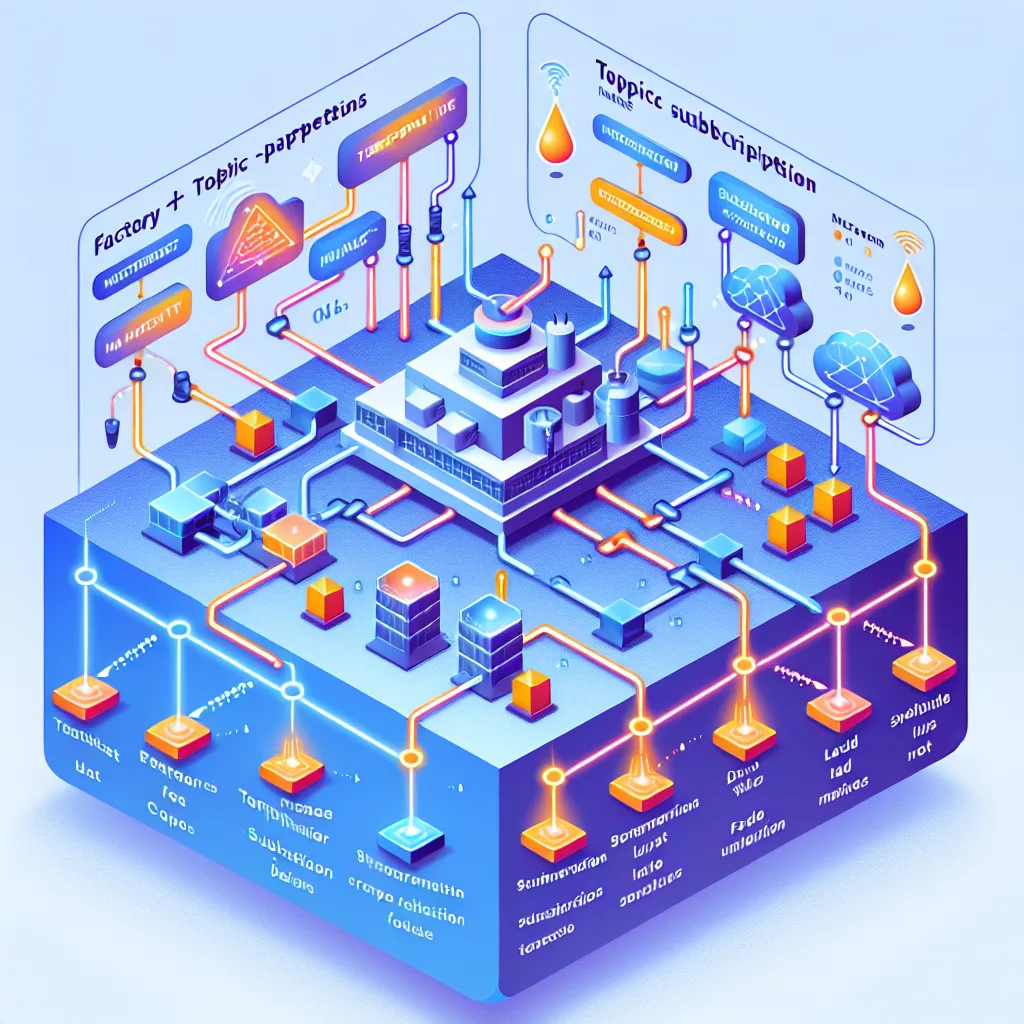
Implementing effective topic hierarchies forms the foundation of scalable messaging systems. Design topic structures that reflect your organizational and logical relationships. Avoid deeply nested hierarchies that complicate subscription management. Use consistent naming conventions. Include metadata like device identifiers and data types in topic paths to facilitate automated processing.
Security configuration requires careful attention to authentication, authorization, and encryption. Enable TLS encryption for all broker connections. This is especially important when transmitting sensitive industrial or personal data. Implement certificate-based authentication for device identification. Use access control lists to restrict topic access based on client roles and requirements.
Connection management best practices include configuring appropriate keepalive intervals. They also include implementing exponential backoff for reconnection attempts. Set reasonable session timeouts to balance resource usage with client needs. Monitor connection patterns to detect potential security issues or system problems.
Message Design and Optimization
Design message payloads efficiently to minimize bandwidth usage and processing overhead. Use compact data formats like JSON or protocol buffers. Avoid including unnecessary metadata in each message. Consider using binary payloads for high-frequency sensor data. Maintain human-readable formats for configuration and control messages.
Implement appropriate QoS levels based on message importance and system requirements. Use QoS 0 for high-frequency sensor readings where occasional loss is acceptable. Use QoS 1 for important status updates. Use QoS 2 only for critical control commands where duplicate execution could cause problems.
Performance Optimization Strategies
Broker performance optimization begins with proper hardware sizing and configuration. Allocate sufficient memory for message queuing and session storage. This is especially important for deployments supporting many persistent sessions. Use fast storage for message persistence. Configure operating system parameters to handle large numbers of concurrent connections.
Monitor broker performance metrics. These include connection counts, message throughput, queue depths, and memory usage. Establish baseline performance measurements. Implement alerting for conditions that might indicate capacity limits or system problems. Regular performance analysis helps identify optimization opportunities before they impact IoT applications.
Load balancing strategies help distribute client connections and message processing across multiple broker instances. Use DNS round-robin, hardware load balancers, or application-level routing to distribute clients evenly. Consider geographic distribution for global IoT deployments. Place brokers closer to device concentrations to reduce latency.
Clustering and High Availability
High-availability broker configurations use clustering or active-passive failover. This eliminates single points of failure. Clustered brokers synchronize client sessions and message queues. This allows seamless failover when individual brokers become unavailable. This architecture ensures continuous operation for mission-critical IoT systems.
Bridge configurations connect multiple brokers to create distributed architectures. They forward messages between different network segments or geographic locations. Bridges enable hybrid deployments where local brokers handle time-sensitive operations. They synchronize with central systems for coordination and analysis.
Industrial Internet of Things Deployment Strategies
The internet of things revolution depends heavily on robust messaging infrastructure. This infrastructure can connect devices across industrial networks efficiently. Message brokers serve as the central hub for these connections. They enable seamless data exchange between sensors, controllers, and monitoring systems. When deploying brokers using TLS encryption and authentication mechanisms, manufacturers ensure secure communication channels. These meet industrial security standards.
Establishing a reliable connection to the broker requires careful consideration of network topology and failover mechanisms. Industrial environments often implement redundant pathways to maintain continuous operation. This works even when primary network links fail. The broker is responsible for maintaining session states and ensuring message delivery according to configured quality of service levels. This proves critical for time-sensitive manufacturing processes.
Broker Architecture and Client Communication Patterns
Communication between clients and brokers follows well-defined protocols. These optimize network bandwidth and processing overhead. Brokers implement retention policies and cleanup procedures to manage memory usage effectively. The architecture allows for horizontal scaling through clustering and load distribution across multiple broker instances.
Every deployment requires a broker that can handle the expected message throughput and concurrent client connections. Brokers play a crucial role in topic management, subscription handling, and message routing throughout the network infrastructure. When planning capacity, consider that the broker requires sufficient processing power and memory to handle peak loads during critical operational periods.
Advanced deployments often utilize bridge brokers to connect geographically distributed networks or integrate with cloud services. The broker and clients must maintain heartbeat communications to detect network failures and trigger appropriate reconnection procedures. Brokers implement access control mechanisms that restrict topic access based on client credentials and authorization policies. This ensures sensitive operational data remains protected.
High availability configurations require an HA broker setup with shared storage and automatic failover capabilities. When implementing a new broker instance, administrators must configure persistence settings, logging parameters, and monitoring endpoints. The broker can integrate with existing enterprise systems through plugins and API extensions. These enable custom authentication and data transformation workflows.
Clients send messages to the broker using publish operations. Subscribers receive filtered content based on their topic subscriptions. A broker that supports clustering can distribute client connections across multiple nodes. This improves both performance and reliability. This distributed approach ensures that individual node failures don't disrupt the entire messaging infrastructure.
Message Persistence and Reliability
Message brokers implement sophisticated message persistence mechanisms to ensure reliable delivery. This works even when clients disconnect unexpectedly. Brokers store messages with QoS levels 1 and 2 in persistent storage until they receive acknowledgment from subscribers. This prevents message loss during network interruptions. However, brokers must manage storage capacity through configurable retention policies and disk space limits to prevent storage exhaustion.
The broker's session state management plays a crucial role in maintaining client connections and message queues. When a client connects with a clean session flag set to false, the broker preserves the client's subscription information and queued messages across disconnections. This persistent session capability enables industrial IoT applications to maintain data integrity. This works even in environments with intermittent connectivity.
Security Architecture and Access Control
Modern message brokers incorporate multiple layers of security. These protect industrial communication channels from unauthorized access and data breaches. TLS/SSL encryption secures data transmission between clients and brokers. Certificate-based authentication provides stronger identity verification than username/password combinations. Access control lists (ACLs) allow administrators to define detailed permissions for publish and subscribe operations on specific topic hierarchies.
Authentication plugins extend broker security capabilities by integrating with existing enterprise identity systems. These include LDAP, OAuth, or custom databases. These plugins enable centralized user management and support role-based access control. This ensures that sensors can only publish to designated topics and control systems receive data only from authorized sources. Regular security audits and firmware updates maintain protection against emerging threats.
Topic-based authorization provides fine-grained control over message routing and access permissions within industrial networks. Administrators can configure wildcard patterns and topic filters to restrict client access to specific device groups or facility areas. This prevents unauthorized cross-contamination between different operational zones.
Frequently Asked Questions
What makes message brokers different from other messaging systems?
Message brokers are specifically designed for IoT applications. They provide lightweight protocol overhead and efficient handling of intermittent connections. Unlike traditional messaging systems, they excel at managing thousands of small, resource-constrained devices that frequently connect and disconnect. The publish-subscribe architecture and hierarchical topic structure make them ideal for sensor networks and distributed IoT systems.
How do message brokers handle client connection failures?
When a client connection fails, the broker detects the disconnection through keepalive mechanisms or network timeouts. For persistent sessions, the broker maintains subscription information and queues incoming messages according to the client's QoS requirements. Last Will and Testament messages can notify other clients about the disconnection. This enables automated failover procedures in IoT applications.
Can multiple message brokers work together in a distributed architecture?
Yes, multiple brokers can be connected through bridging configurations that forward messages between broker instances. This enables distributed IoT architectures where local brokers handle regional device communication while synchronizing with central brokers for coordination. Clustering solutions also allow brokers to work together as a single logical unit. This provides high availability and load distribution.
What security features do message brokers provide for industrial IoT deployments?
Modern brokers support comprehensive security including TLS encryption, client certificate authentication, and topic-based access control. Industrial IoT implementations can integrate with enterprise authentication systems and implement detailed permissions controlling which clients can publish to or subscribe from specific topics. Network-level security and secure certificate management further protect sensitive operational data.
How do you choose the best message broker for your IoT application?
Broker selection depends on specific requirements. This includes expected client connections, message throughput, availability requirements, and integration needs. Open source solutions work well for development and smaller deployments. Commercial brokers provide enterprise features and support. Consider factors like clustering capabilities, monitoring tools, cloud integration, and long-term scalability when making decisions.
What broker monitoring practices ensure reliable IoT communication?
Effective broker monitoring tracks connection counts, message throughput, queue depths, and system resource utilization. Implement alerting for abnormal patterns that might indicate security issues or capacity problems. Monitor client connection patterns, failed authentication attempts, and message delivery failures to maintain system health. Regular performance analysis helps identify optimization opportunities and capacity planning needs.
What happens when multiple brokers need to communicate with each other?
Bridge brokers establish connections between separate messaging networks. This enables message forwarding and topic synchronization across different domains. This architecture allows organizations to connect devices in remote locations while maintaining centralized monitoring and control capabilities. Communication between clients and brokers remains transparent to end users, even when messages traverse multiple broker instances.
How do I choose the right broker architecture for my industrial application?
The broker must support your expected message throughput, concurrent connections, and reliability requirements. Consider implementing an HA broker configuration for critical applications where downtime costs are high. Every deployment requires a broker that can scale with growing device populations and evolving operational requirements.
What are the key differences between standalone and clustered broker deployments?
Standalone brokers handle all client connections and message processing on a single server instance. This makes them suitable for smaller deployments. Clustered configurations distribute the workload across multiple nodes. This provides better performance and fault tolerance for large-scale internet of things applications. Clustered systems include shared storage and coordination mechanisms that maintain data consistency across all broker instances.
How do brokers handle client authentication and message security?
Brokers implement multiple authentication mechanisms. These include username/password, client certificates, and integration with external identity providers. The broker enforces topic-level permissions that control which clients can publish or subscribe to specific message channels. Messages to the broker travel through encrypted connections when TLS security is properly configured. This protects sensitive industrial data during transmission.
What happens when a message broker receives more messages than it can process?
Message brokers implement flow control mechanisms and message queuing to handle traffic spikes without losing data. When message volume exceeds processing capacity, brokers queue incoming messages in memory or persistent storage based on QoS requirements. However, brokers enforce configurable limits on queue sizes and connection rates to prevent resource exhaustion and maintain system stability.
How do message brokers handle client authentication failures?
When clients fail authentication, message brokers immediately terminate the connection and log the security event for monitoring purposes. Brokers prevent unauthenticated clients from accessing any topics or services. This ensures complete isolation of unauthorized connection attempts. Many enterprise brokers implement rate limiting and IP blocking to prevent brute force attacks against authentication systems.
Can message brokers guarantee message delivery order?
Message brokers maintain message order for individual client connections but cannot guarantee global ordering across multiple publishers to the same topic. Within a single session, brokers preserve the publish sequence for each specific connection. However, when multiple clients publish to identical topics at the same time, subscribers may receive messages in different orders due to network latency and processing variations.
What backup strategies work best for message broker configurations?
Effective message broker backup strategies include regular snapshots of configuration files, security certificates, and persistent message stores. Administrators must implement scheduled backups of ACL rules, topic hierarchies, and client credentials. Brokers do not automatically replicate configurations across multiple instances. Database replication and configuration management tools provide additional protection for mission-critical industrial deployments.
Conclusion
Message brokers provide the foundation for building robust IoT systems. These scale from simple sensor networks to complex industrial deployments. The architecture components work together to provide reliable message routing, connection management, and security features essential for modern IoT applications. By implementing the best practices outlined in this guide and selecting appropriate broker implementations, organizations can build communication infrastructure. This infrastructure supports their specific use case requirements while maintaining the flexibility to evolve with changing technology needs.
Related Articles
OPC UA for Industrial M2M Communication
Manufacturing operations need strong communication protocols. These protocols connect old systems with new IoT infrastructure. OPC UA for industrial m2m...
WebSocket vs MQTT vs CoAP: Choosing the Best Protocol
Selecting the right communication protocol can make or break your IoT project. Choosing between MQTT, CoAP, and real-time protocols means understanding ...
M2M Communication Protocols: A Complete Comparison Guide
M2M communication protocols form the foundation of modern IoT systems. They let billions of devices talk to each other without human help. This guide lo...