In this article
- Edge computing processes data locally near IoT devices, reducing latency and bandwidth usage for real-time applications
- Cloud computing centralizes processing and storage at remote data centers, offering massive scalability and computational power
- Edge computing excels in autonomous systems, industrial automation, and scenarios requiring millisecond response times
- Cloud computing provides superior storage capacity, advanced AI capabilities, and cost-effective solutions for complex analytics
- Most IoT projects benefit from hybrid approaches that combine edge and cloud computing for optimal performance
- Decision factors include latency requirements, bandwidth constraints, security needs, and processing workload characteristics
Choosing between edge computing and cloud computing for your IoT project is one of the most important decisions you'll make. This computing vs debate directly affects your system's performance, costs, and abilities. Edge computing brings processing power closer to your IoT devices. Cloud computing uses remote servers for central operations. Understanding when to use edge, cloud, or both approaches determines if your project meets its real-time needs and scales well.
The decision isn't simply edge vs cloud. It's about matching your specific use cases with the right computing setup. Edge computing works great when you need fast responses. Cloud computing offers unmatched growth ability and storage space. Many successful IoT deployments combine both approaches. This creates hybrid systems that optimize performance and cost.
- Understanding Edge Computing for IoT Applications
- Cloud Computing Fundamentals and IoT Integration
- Key Differences Between Edge and Cloud Computing
- When to Use Edge Computing in Your IoT Project
- Cloud Computing Use Cases for IoT Deployments
- Hybrid Edge and Cloud Computing Strategies
- Decision Framework for Your IoT Project
Understanding Edge Computing for IoT Applications
Edge computing moves computing resources closer to where data starts. Instead of sending every piece of information to remote data centers, edge computing enables local processing at or near the edge device itself. This setup reduces the distance data travels. It creates faster response times and reduces bandwidth use.
An edge device can be a simple sensor with built-in processing. Or it can be a sophisticated edge server that handles multiple IoT devices at once. These devices perform data processing tasks locally. They make decisions without waiting for instructions from a central server. For example, a smart factory might use edge computing to analyze machine vibration data in real-time. It detects problems within milliseconds and triggers immediate safety responses.
Edge Computing Architecture Components
Edge computing systems include several key parts working together. Edge devices collect and initially process data from sensors and actuators. Edge servers provide more processing power for complex analytics and AI workloads. These go beyond what individual devices can handle. These components connect through local networks. They then link to broader cloud infrastructure when needed.
The edge computing processes data through multiple layers. Simple filtering happens at the device level. Advanced machine learning happens at edge servers. This tiered approach ensures only relevant, processed information gets sent to the cloud. This optimizes bandwidth usage and reduces operational costs. Using edge computing this way creates a more responsive and efficient IoT ecosystem.
Cloud Computing Fundamentals and IoT Integration
Cloud computing centralizes data processing, storage, and AI capabilities in remote servers. Providers like google cloud, microsoft azure, and amazon web services manage these servers. This approach offers virtually unlimited scalability and processing power. This makes it ideal for complex analytics and large-scale data storage. Cloud computing for IoT excels when projects need massive computing resources. It also works well when managing thousands of connected devices.
The cloud infrastructure provides robust storage and processing capabilities. Individual edge devices cannot match these. When IoT devices collect amounts of data that exceed local processing capacity, cloud systems can handle the workload efficiently. Cloud storage solutions accommodate petabytes of historical data. This enables long-term analytics and machine learning model training. This would be impossible at the edge.
Benefits of Cloud Computing for IoT
Cloud computing offers several advantages for IoT deployments. Scalability allows systems to grow from hundreds to millions of devices. This happens without major infrastructure changes. Advanced AI and machine learning services provide sophisticated analytics capabilities. These would be costly to implement locally. Cloud providers also handle security updates, maintenance, and infrastructure management. This reduces operational overhead.
Cloud services enable rapid deployment of IoT solutions. They don't require significant upfront capital investment. The pay-as-you-use model makes cloud computing cost-effective for many projects. This is especially true for projects with variable workloads or seasonal demand patterns. Cloud computing offers global reach. This allows IoT projects to span multiple geographic regions with consistent performance.
Key Differences Between Edge and Cloud Computing
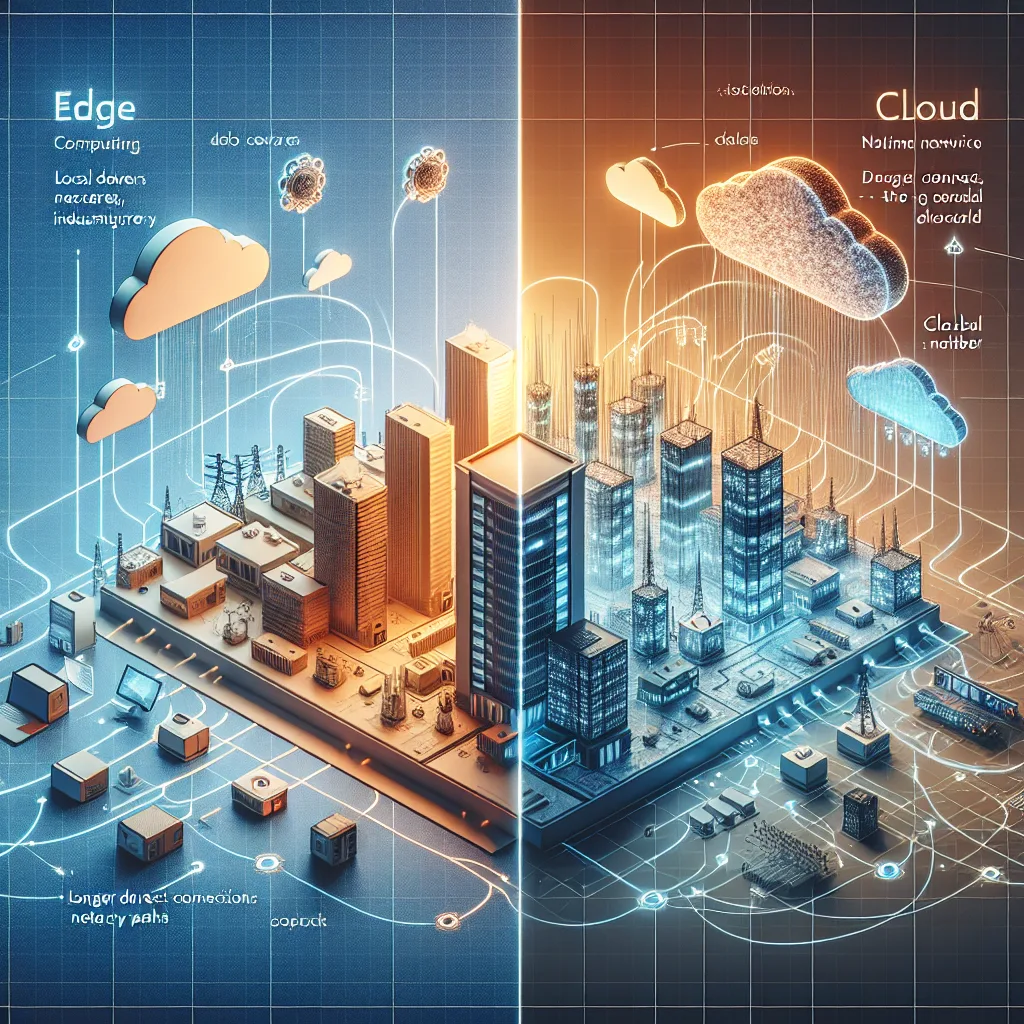
The key differences between edge computing vs cloud computing center on where data processing occurs. They also focus on how this affects system performance. Edge computing vs cloud computing represents different philosophies. Local intelligence versus centralized power. Understanding these differences helps determine which approach suits your specific IoT requirements.
Latency represents the most significant difference between these approaches. Edge computing achieves lower latency by processing data locally. This often reduces response times from hundreds of milliseconds to single-digit milliseconds. This low latency makes edge computing essential for autonomous vehicles. It's also crucial for industrial safety systems and real-time control applications. In these cases, delays could cause failures or safety hazards.
Processing Power and Capabilities
Processing power varies dramatically between edge and cloud computing environments. Cloud computing provides virtually unlimited computing resources. This enables complex AI algorithms and big data analytics. These would overwhelm edge devices. However, edge computing offers sufficient processing power for many real-time applications. This is especially true when using specialized chips designed for AI inference.
Bandwidth usage differs significantly between these approaches. Edge computing minimizes bandwidth consumption by processing data locally. It transmits only essential results. Cloud computing requires continuous data transmission to remote servers. This potentially creates bandwidth bottlenecks in areas with limited connectivity or high data volumes.
Security and Compliance Considerations
Security approaches differ between edge and cloud computing. Edge computing keeps sensitive data local. This reduces exposure during transmission but requires robust local security measures. Cloud computing centralizes security management. But it requires data to travel across networks. This potentially increases attack surfaces. Both approaches need comprehensive security strategies tailored to their specific architectures.
When to Use Edge Computing in Your IoT Project
Use edge computing when your IoT project requires real-time responses. Also use it when operating in bandwidth-constrained environments or needing autonomous operation capabilities. Edge computing is essential for applications where millisecond response times determine success or failure. Manufacturing equipment monitoring, autonomous vehicle control systems, and emergency response systems all benefit from edge computing's immediate local processing.
Industrial automation represents a prime use case for edge computing. Factory equipment generates continuous data streams. These need immediate analysis to prevent failures or optimize performance. Rather than sending this data to remote data centers, edge computing processes information locally. This enables real-time adjustments to manufacturing processes. This local processing maintains production efficiency even when internet connectivity becomes unreliable.
Edge Computing Use Cases
Autonomous systems rely heavily on edge computing for critical decision-making. Self-driving vehicles cannot depend on cloud connectivity for basic navigation and safety decisions. They need local AI processing to respond instantly to road conditions. Similarly, autonomous drones use edge computing to process visual data. They make flight adjustments without waiting for remote server responses.
Healthcare monitoring applications leverage edge computing for patient safety. Wearable devices that monitor vital signs need to detect emergencies immediately. They trigger alerts within seconds rather than waiting for data to reach cloud servers. Edge computing in these scenarios can save lives by enabling faster emergency response times.
Cloud Computing Use Cases for IoT Deployments
Cloud computing excels in IoT projects requiring massive data analytics, long-term data storage, or complex AI model training. When your project needs to analyze historical trends across thousands of devices, cloud computing provides the necessary computing resources. It also provides storage capacity that edge devices cannot match. The same is true when training sophisticated machine learning models.
Smart city initiatives demonstrate cloud computing's strengths in large-scale IoT deployments. These projects collect data from thousands of sensors. They monitor traffic, air quality, energy usage, and public safety across entire metropolitan areas. The cloud provides the centralized processing power needed to analyze these massive datasets. It identifies citywide patterns and optimization opportunities.
Data Analytics and Machine Learning
Complex analytics workloads benefit significantly from cloud computing's virtually unlimited processing power. Training AI models requires substantial computing resources and large datasets. Individual edge devices cannot handle these. Cloud platforms provide specialized AI services and high-performance computing resources. These enable sophisticated analytics impossible at the edge.
Predictive maintenance applications often combine edge and cloud approaches. Edge devices monitor equipment in real-time, detecting immediate issues. Meanwhile, cloud systems analyze long-term trends to predict future maintenance needs. This hybrid approach leverages both real-time edge processing and cloud-based predictive analytics for comprehensive equipment management.
Hybrid Edge and Cloud Computing Strategies
Edge and cloud computing work best together in many IoT deployments. This creates systems that optimize both real-time performance and long-term analytics capabilities. This hybrid approach leverages each technology's strengths while reducing their individual limitations.
Fog computing represents one hybrid approach. It extends cloud computing capabilities closer to IoT devices while maintaining centralized management. Fog computing creates intermediate processing layers between edge devices and cloud data centers. It provides more processing power than individual edge devices. At the same time, it reduces latency compared to pure cloud solutions.
Hybrid Architecture Implementation
Successful hybrid implementations typically process time-critical data at the edge. They send processed results and historical data to the cloud. This approach ensures real-time responsiveness while enabling comprehensive analytics and machine learning. Edge computing handles immediate decisions. Cloud computing manages long-term optimization and strategic insights.
Data flow management becomes crucial in hybrid systems. Edge devices filter and preprocess data. They transmit only relevant information that gets sent to the cloud. This selective data transmission optimizes bandwidth usage. It also ensures cloud systems receive the information needed for comprehensive analysis. The cloud provides centralized management and updates edge devices with improved algorithms and configurations.
Decision Framework for Your IoT Project
Deciding between cloud and edge computing requires evaluating multiple factors specific to your IoT project requirements. Start by analyzing your latency requirements. Applications needing sub-10 millisecond responses typically need edge computing. Applications tolerating 100+ millisecond delays can use cloud computing effectively.
Consider your bandwidth constraints and connectivity reliability. Projects with limited internet connectivity or high data volumes benefit from edge computing's local processing capabilities. Conversely, projects with reliable high-speed connectivity can leverage cloud computing's superior processing power and storage capacity.
Cost and Scalability Analysis
Evaluate both initial deployment costs and long-term operational expenses. Edge computing requires higher upfront hardware investments. But it may reduce ongoing connectivity and cloud service costs. Cloud computing typically has lower initial costs but ongoing usage fees. These scale with data volume and processing requirements.
Scalability requirements also influence the decision. If you expect rapid growth from hundreds to thousands of devices, cloud computing's elastic scalability provides advantages. For projects with predictable, stable device counts, edge computing's fixed capacity might prove more cost-effective and reliable.
Understanding the Core Differences
Cloud vs edge computing differs in where processing occurs. Cloud systems centralize computation in distant data centers. Edge infrastructure brings processing power directly to the edge of a network where sensors and devices operate. IoT applications often require immediate responses that distant cloud servers cannot provide efficiently.
The benefits of edge computing become apparent when you examine latency requirements for industrial applications. Edge computing reduces the time between data collection and actionable insights. It does this by eliminating round trips to central cloud servers. However, edge infrastructure requires local computing infrastructure investment. Cloud service providers offer ready-to-use resources that scale automatically based on demand.
Hybrid Approaches: Combining Edge and Cloud
Modern IoT architects rarely choose between edge computing and cloud in absolute terms. Most successful deployments leverage both edge and the cloud strategically. Edge devices connect to local processing nodes for time-sensitive operations. Meanwhile, the central cloud handles long-term analytics, machine learning model training, and data archival. This approach allows you to deploy edge computing for immediate control decisions. At the same time, it maintains cloud connectivity for broader system insights.
Edge locations handle real-time processing for applications like supply chain management. Here, millisecond decisions affect operational efficiency. The cloud vs edge computing debate misses the point. Edge computing doesn't replace the cloud but complements it by distributing workloads optimally. Smart deployments position compute resources where they deliver maximum value. This creates resilient systems that function even when connectivity to the distant cloud fails temporarily.
Understanding the Edge-Cloud Relationship
Edge computing processes data near the source of generation. It doesn't transmit data to distant data centers. The edge acts as a local processing hub that reduces latency and bandwidth requirements for time-sensitive applications. This distributed approach becomes essential when millisecond response times determine system success or failure.
Fog computing sits between the edge and cloud layers. It provides an intermediate processing tier for complex IoT deployments. This hybrid architecture delivers computing resources at multiple levels. It allows organizations to optimize data flow based on processing requirements. The fog layer handles computationally intensive tasks that exceed edge device capabilities. It maintains lower latency than pure cloud solutions.
IoT applications drive the need for distributed processing. IoT generates massive data volumes that would overwhelm network infrastructure if transmitted entirely to centralized cloud services. Smart factories, autonomous vehicles, and real-time monitoring systems depend on this multi-tier architecture to function effectively.
Processing Distribution Strategies
Determining where to process data requires analyzing the specific requirements of your devices or edge infrastructure. The edge handles immediate decision-making tasks like emergency shutdowns, collision avoidance, and alarm triggers. These cannot tolerate network delays. Meanwhile, the cloud excels at long-term analytics, machine learning model training, and enterprise-wide reporting. These benefit from centralized processing power.
The delivery of computing resources across edge and cloud tiers enables organizations to balance performance, cost, and scalability requirements. Critical control loops operate at the edge for real-time responsiveness. Historical data analysis and predictive maintenance algorithms run in the cloud. This distribution strategy maximizes system efficiency while minimizing infrastructure costs and network bandwidth consumption.
Making the Financial Case for Edge Computing
Edge computing reduces operational costs by minimizing bandwidth usage. It eliminates recurring cloud storage fees for massive datasets. Manufacturing facilities processing thousands of sensor readings per second can save substantial money. They filter data locally rather than transmitting everything to remote servers. IoT devices generate exponentially more data than traditional systems. This makes cloud-only approaches financially unsustainable for many industrial applications.
Cloud computing excels in scenarios requiring complex analytics and machine learning capabilities. These exceed local processing power. Research institutions analyzing environmental sensor networks across multiple geographic regions benefit from cloud platforms. These can correlate vast datasets and identify patterns impossible to detect at individual edge locations. The scalability of cloud resources allows these organizations to process years of historical data alongside real-time streams. They don't need to invest in expensive on-premises infrastructure.
Hybrid Architectures: The Best of Both Worlds
Many successful IoT deployments combine edge and cloud computing in hybrid architectures. These optimize for both performance and functionality. Smart city traffic management systems process immediate safety decisions at edge nodes. They send aggregated traffic patterns to cloud platforms for long-term urban planning analysis. This approach ensures critical safety responses occur within milliseconds. It still leverages cloud computing power for strategic insights.
Edge-to-cloud data synchronization requires careful planning. You need to balance local autonomy with centralized oversight. Industrial predictive maintenance systems typically run anomaly detection algorithms on edge devices. But they upload diagnostic results to cloud databases for fleet-wide trend analysis and maintenance scheduling optimization.
Frequently Asked Questions
What are the main advantages of edge computing over cloud computing for IoT?
Edge computing provides lower latency, reduced bandwidth usage, improved data privacy, and autonomous operation capabilities. It processes data locally near IoT devices. This enables real-time responses within milliseconds rather than hundreds of milliseconds required for cloud processing. Edge computing also continues functioning during internet outages. This makes it essential for critical applications.
When should I choose cloud computing instead of edge computing for my IoT project?
Choose cloud computing when you need massive storage capacity, complex AI analytics, or managing thousands of devices across multiple locations. Cloud computing excels for applications requiring sophisticated machine learning, historical data analysis, or when initial costs must be minimized. Projects with reliable internet connectivity and non-critical latency requirements often benefit from cloud computing's scalability and processing power.
Can I combine edge and cloud computing in the same IoT system?
Yes, hybrid approaches combining edge and cloud computing often provide optimal results. Edge computing handles real-time processing and immediate responses. Cloud computing manages long-term analytics, machine learning model training, and centralized management. This combination leverages the benefits of both approaches while minimizing their individual limitations.
How does fog computing relate to edge and cloud computing?
Fog computing serves as an intermediate layer between edge devices and cloud infrastructure. It provides more processing power than individual edge devices while maintaining lower latency than pure cloud solutions. It extends cloud computing capabilities closer to IoT devices. This creates a distributed architecture that balances real-time processing needs with centralized management benefits.
What factors should determine my choice between edge vs cloud computing?
Key factors include latency requirements, bandwidth availability, data privacy needs, processing complexity, scalability requirements, and budget constraints. Applications requiring millisecond responses need edge computing. Complex analytics favor cloud computing. Consider your connectivity reliability, data volumes, and whether your system needs autonomous operation capabilities when internet connections fail.
How do security considerations differ between edge and cloud computing?
Edge computing keeps sensitive data local. This reduces transmission risks but requires robust security measures on distributed devices. Cloud computing centralizes security management with professional-grade protection. But it requires secure data transmission. Both approaches need comprehensive security strategies. Edge computing focuses on device hardening. Cloud computing emphasizes network security and access controls.
How do I choose between edge computing and cloud for my IoT project?
The decision depends on your latency requirements, bandwidth constraints, and data sensitivity. Edge computing excels for real-time applications requiring sub-100ms response times. Cloud solutions work better for heavy analytics and machine learning workloads. Consider hybrid architectures that leverage both edge and cloud components based on specific use case requirements.
What are the main benefits of edge computing vs cloud computing?
Edge computing reduces latency by processing data closer to IoT sensors. It decreases bandwidth costs and maintains operation during connectivity outages. Cloud computing offers unlimited scalability, advanced analytics capabilities, and eliminates the need for local computing infrastructure maintenance. Most enterprise deployments combine both approaches to maximize operational efficiency.
Can edge computing completely replace cloud services in IoT deployments?
Edge computing cannot fully replace the cloud for most IoT applications. Each serves different purposes in the overall architecture. Edge locations excel at immediate processing and control decisions. Cloud platforms provide superior data storage, advanced analytics, and system-wide orchestration capabilities. Successful IoT implementations typically integrate edge and cloud resources strategically.
What infrastructure considerations affect edge vs cloud computing decisions?
Edge infrastructure requires local hardware investment, maintenance expertise, and physical security measures at multiple locations. Cloud service providers handle infrastructure management but require reliable internet connectivity. They may introduce latency for time-critical applications. Evaluate your organization's technical capabilities and geographic distribution when making this architectural choice.
What is the main difference between edge and fog computing?
Edge computing processes data directly on or very close to IoT devices. Fog computing sits between the edge and cloud layers. Fog provides intermediate processing power for applications that need more computing resources than edge devices can provide. But they still require lower latency than cloud solutions. The edge handles immediate responses while fog manages more complex local processing tasks.
How do I decide what data to process on devices or edge infrastructure versus the cloud?
Process time-critical data locally where the edge acts as the first line of defense for immediate decisions and safety functions. Send aggregated data, historical trends, and complex analytics to the cloud for deeper processing and long-term storage. IoT applications often require both real-time responses and comprehensive analysis. Each tier handles these most efficiently.
Can edge computing work independently without cloud connectivity?
Yes, edge computing can operate independently for local decision-making and control functions. However, IoT systems eventually need cloud connectivity for updates, monitoring, and data backup. The delivery of computing services works best when edge and cloud tiers complement each other. They shouldn't operate in complete isolation.
What happens when my edge devices lose cloud connectivity?
Well-designed edge systems continue operating autonomously using cached data and pre-programmed logic when cloud connectivity fails. The edge handles critical functions locally while storing data for later synchronization when connectivity returns. This redundancy ensures that devices or edge infrastructure maintain operational continuity even during network outages or cloud service disruptions.
When should I choose edge computing over cloud computing for my IoT project?
Choose edge computing when your application requires real-time responses under 100 milliseconds. Also choose it when operating in areas with unreliable internet connectivity or processing sensitive data that cannot leave your premises. Edge computing works best for applications like autonomous vehicles, industrial safety systems, and medical monitoring devices. In these cases, latency directly impacts performance or safety outcomes.
What are the main cost differences between edge and cloud IoT deployments?
Edge computing involves higher upfront hardware costs but lower ongoing operational expenses. Cloud computing requires minimal initial investment but accumulates bandwidth and storage fees over time. For high-volume data applications, edge processing typically becomes more cost-effective after 12-18 months of operation. This is due to reduced data transmission costs.
Can edge and cloud computing work together in the same IoT system?
Yes, hybrid edge-cloud architectures provide the most flexibility. They process time-critical data locally while leveraging cloud resources for complex analytics and long-term storage. Most enterprise IoT deployments use this approach. Edge devices handle immediate decisions. Cloud platforms manage historical analysis, software updates, and cross-site coordination.
How do I determine the processing power needed for edge computing in my IoT project?
Calculate your edge processing requirements by analyzing your data volume, required response times, and algorithm complexity. Start by measuring peak data rates from your sensors. Then factor in the computational overhead of your processing algorithms. This determines minimum CPU, memory, and storage specifications for your edge devices.
The choice between edge vs cloud computing for IoT ultimately depends on your specific project requirements. Many successful deployments leverage both approaches strategically. Edge computing delivers the real-time performance and autonomous capabilities needed for critical applications. Cloud computing provides the scalability and analytical power for comprehensive IoT solutions. Evaluate your latency needs, bandwidth constraints, and processing requirements to determine the optimal architecture. This will ensure your IoT project's success.
Related Articles
Digital Twins and M2M: Creating Virtual Replicas of Physical Assets
How to Build an M2M Data Pipeline: From Sensor to Dashboard
Building an IoT data pipeline for M2M communication requires establishing a strong streaming pipeline architecture. This forms the foundation of your en...
Multi-Protocol Gateways for M2M Communication
Industrial automation leaders like Mitsubishi and Omron have embraced multi-protocol gateway technology. They use it to bridge legacy systems with moder...