
In this article
- NB-IoT is a low power wide area network technology. It's designed for massive IoT deployments with extended coverage and minimal power consumption
- NB-IoT operates within licensed cellular spectrum. It uses narrow bandwidth to connect devices efficiently across wide areas
- Key advantages include 10-year battery life, deep indoor penetration, and support for up to 50,000 devices per base station
- Primary use cases span smart metering, asset tracking, environmental monitoring, and smart city applications
- NB-IoT and LTE-M represent the two leading cellular IoT technologies. NB-IoT is optimized for static applications requiring minimal data throughput
- Future integration with 5G networks will enhance NB-IoT capabilities while maintaining backward compatibility
NB-IoT (Low Power Wide Area Network Technology) is a cellular technology. It's made to handle the connectivity challenges of massive IoT deployments. This complete guide explores what NB-IoT is, how it works, and why it has become the top choice for organizations. These organizations deploy large-scale IoT solutions that need extended coverage and ultra-low power consumption.
Traditional cellular technologies fall short when connecting millions of devices. These devices send small amounts of data rarely. NB-IoT fills this critical gap. It provides a purpose-built solution that works well when devices need to operate for years on a single battery. At the same time, it maintains reliable connectivity in challenging environments.
This guide to NB-IoT will give you the technical knowledge and practical insights you need. You'll understand why NB-IoT has become the backbone of modern IoT systems. You'll also learn how it compares to other cellular technologies like LTE-M.
- What is NB-IoT?
- NB-IoT Technologies and Technical Specifications
- Advantages of NB-IoT
- NB-IoT Use Cases and Applications
- NB-IoT vs LTE-M: Choosing the Right Cellular IoT Technology
- NB-IoT Deployment and Network Architecture
- 5G Integration and Future of NB-IoT
- Implementation Considerations for NB-IoT Solutions
What is NB-IoT?
NB-IoT is a low power wide area network (LPWAN) technology. The 3GPP standardized it as part of Release 13. Unlike traditional cellular technologies designed for high-speed data transmission, NB-IoT operates within a narrow bandwidth. It uses just 200 kHz to provide efficient connectivity for IoT devices. These devices need minimal data throughput and maximum battery life.
NB-IoT is optimized for massive IoT scenarios. Thousands of devices need to connect to a single base station. NB-IoT operates in licensed spectrum. This provides guaranteed quality of service and interference-free operation. This cellular IoT technology can deploy in three different modes. These are in-band (within existing LTE carriers), guard-band (in unused resource blocks of LTE carriers), or standalone (in dedicated spectrum).
Key Characteristics of NB-IoT
NB-IoT provides several unique features. These set it apart from other IoT technologies. The protocol supports extended coverage of up to 164 dB maximum coupling loss. This enables connectivity in challenging environments. These include deep underground or inside concrete buildings where traditional cellular signals struggle to reach.
The technology supports massive device connectivity. A single NB-IoT cell can handle up to 50,000 connected devices at the same time. This capability makes NB-IoT ideal for large-scale IoT deployments. These include smart cities, industrial facilities, and agricultural operations.
Power efficiency represents another crucial advantage of NB-IoT. NB-IoT devices can achieve battery lives exceeding 10 years. They do this through advanced power-saving mechanisms. These include Power Saving Mode (PSM) and extended Discontinuous Reception (eDRX). These features allow devices to remain dormant for extended periods while maintaining network registration.
NB-IoT Technologies and Technical Specifications
NB-IoT technologies are built upon a simplified version of LTE. They're optimized specifically for low-power, low-throughput IoT applications. The narrow bandwidth approach allows NB-IoT to achieve superior coverage and penetration compared to traditional cellular technologies.
Frequency Band and Spectrum Utilization
NB-IoT operates across multiple frequency bands globally. These include 700 MHz, 800 MHz, 900 MHz, 1800 MHz, and 2100 MHz. The specific bands depend on regional spectrum allocations. The technology uses OFDMA (Orthogonal Frequency-Division Multiple Access) for downlink communication. It uses SC-FDMA (Single Carrier Frequency-Division Multiple Access) for uplink transmission.
The narrow bandwidth of 200 kHz enables efficient spectrum utilization. It also provides sufficient capacity for typical IoT application requirements. This bandwidth allocation supports data rates up to 250 kbps for downlink and 250 kbps for uplink under optimal conditions. However, practical deployments typically achieve lower throughput rates optimized for power efficiency.
Protocol Stack and Network Architecture
The NB-IoT protocol stack consists of simplified versions of traditional LTE protocols. These are optimized for IoT device requirements. The physical layer has enhanced repetition mechanisms and robust coding schemes. These achieve extended coverage. The MAC layer includes specialized procedures for handling sporadic transmissions typical in IoT applications.
NB-IoT modules integrate these protocol implementations. They provide seamless connectivity for IoT device manufacturers. These modules typically include baseband processors, RF transceivers, and antenna systems. They're optimized for the specific frequency band requirements of target deployment regions.
Advantages of NB-IoT

The benefits of NB-IoT extend across multiple areas. This makes it the preferred choice for numerous IoT applications. These applications need reliable, long-range connectivity with minimal power consumption.
Extended Coverage and Deep Penetration
NB-IoT provides extended coverage compared to traditional cellular technologies. It achieves up to 20 dB better coverage than GPRS. This enhancement enables reliable connectivity in challenging environments. These include basements, underground facilities, and rural areas with poor cellular coverage. The technology can penetrate through multiple building walls and concrete structures. This ensures consistent connectivity for indoor IoT deployments.
Ultra-Low Power Consumption
Low power operation represents a fundamental advantage of NB-IoT. It enables devices to operate for years without battery replacement. The combination of Power Saving Mode (PSM) and extended Discontinuous Reception (eDRX) allows NB-IoT devices to enter deep sleep states. They maintain network connectivity while doing this. During PSM, devices can remain inactive for hours or days. They consume only microamps of current.
This low power capability makes NB-IoT ideal for applications where device maintenance is costly or impractical. Examples include remote environmental sensors, utility meters in hard-to-reach locations, or tracking devices deployed across vast geographical areas.
Massive Device Connectivity
A single NB-IoT base station can support up to 50,000 devices. This makes it ideal for large-scale iot deployments. This massive connectivity capability enables smart city implementations, industrial IoT monitoring systems, and agricultural sensor networks to scale efficiently. They don't require dense infrastructure deployment.
The technology achieves this scalability through efficient resource allocation algorithms and optimized signaling procedures. These minimize network overhead while maintaining reliable connectivity for individual devices.
Cost-Effective Implementation
NB-IoT offers significant cost advantages for both device manufacturers and network operators. The simplified protocol stack reduces chip complexity and manufacturing costs. The efficient spectrum utilization enables operators to maximize their infrastructure investments. This cost efficiency accelerates iot adoption across price-sensitive applications and emerging markets.
NB-IoT Use Cases and Applications
NB-IoT applications span diverse industries. Devices need reliable connectivity with minimal power consumption and infrequent data transmission. The technology works well in scenarios where devices remain stationary or move slowly. They transmit small data packets periodically.
Smart Metering and Utilities
Smart metering represents one of the most prominent nb-iot use cases. Water, gas, and electricity meters equipped with NB-IoT connectivity can transmit usage data automatically. This eliminates the need for manual readings. It also provides utilities with real-time consumption insights. The extended battery life ensures meters can operate for their entire lifespan without battery replacement.
The extended coverage capabilities of NB-IoT make it particularly suitable for utility applications. Meters are often located in basements, underground vaults, or remote locations with challenging RF environments.
Asset Tracking and Fleet Management
NB-IoT enables efficient tracking of valuable assets across wide geographical areas. Construction equipment, shipping containers, and agricultural machinery can be monitored continuously. This has minimal impact on battery life. The long range connectivity ensures tracking capability even in remote locations where traditional cellular coverage is limited.
For fleet management applications, NB-IoT provides cost-effective connectivity for vehicle telematics. This enables monitoring of location, fuel consumption, and maintenance requirements. It doesn't have the higher power consumption associated with traditional cellular connections.
Environmental Monitoring
Environmental monitoring applications leverage NB-IoT's low power and extended coverage capabilities. They deploy sensor networks across large geographical areas. Air quality monitoring stations, weather sensors, and pollution detection systems can operate autonomously for years. They provide continuous environmental data.
Smart agriculture implementations use NB-IoT to monitor soil moisture, temperature, and other critical parameters across farmland. This enables precision agriculture techniques that optimize crop yields while minimizing resource consumption.
Smart City Applications
Smart parking systems utilize NB-IoT to connect devices that detect parking space occupancy. They provide real-time information to drivers while operating on battery power for extended periods. Street lighting systems can report status and energy consumption data while supporting remote control capabilities.
Waste management systems employ NB-IoT-connected sensors in garbage bins. These optimize collection routes and schedules based on actual fill levels. This reduces operational costs and environmental impact.
Industrial IoT Applications
Industrial iot deployments leverage NB-IoT for monitoring equipment status, vibration analysis, and predictive maintenance applications. The technology's ability to penetrate industrial environments and provide reliable connectivity makes it suitable for monitoring critical infrastructure components.
Supply chain management benefits from NB-IoT tracking capabilities. This enables real-time visibility of goods movement from manufacturing facilities to end customers. Temperature-sensitive shipments can be monitored continuously to ensure product quality during transport.
NB-IoT vs LTE-M: Choosing the Right Cellular IoT Technology
NB-IoT and LTE-M represent the two primary cellular technologies designed specifically for IoT applications. Understanding their differences is crucial for selecting the appropriate iot solution for specific use case requirements.
Technical Comparison
LTE-M operates with a bandwidth of 1.4 MHz. This compares to NB-IoT's 200 kHz. This enables higher data throughput rates up to 1 Mbps. This difference makes LTE-M more suitable for applications requiring higher data rates. Examples include video surveillance or real-time telemetry.
NB-IoT provides superior coverage and penetration due to its narrow bandwidth and enhanced repetition mechanisms. The technology achieves approximately 20 dB better coverage than GSM. LTE-M provides around 15 dB improvement over traditional LTE.
Power consumption varies between the technologies based on application requirements. NB-IoT typically achieves lower power consumption for applications with infrequent data transmission. LTE-M may be more efficient for applications requiring regular communication or mobility support.
Mobility and Handover Support
LTE-M supports full mobility with seamless handover between base stations. This makes it suitable for tracking applications where devices move between cell coverage areas. NB-IoT provides limited mobility support. It's optimized for stationary or slowly moving devices.
This difference makes LTE-M the preferred choice for vehicle tracking, logistics applications, and wearable devices. These require continuous connectivity while moving. NB-IoT excels in fixed installations like smart meters, environmental sensors, and infrastructure monitoring systems.
Application Suitability
The choice between nb-iot and lte-m depends on specific application requirements:
- Choose NB-IoT for: Smart metering, environmental monitoring, asset tracking (stationary), smart parking, waste management
- Choose LTE-M for: Fleet tracking, wearable devices, emergency systems, applications requiring voice capability, real-time monitoring with higher data rates
Many deployments benefit from a hybrid approach. They use both technologies based on specific device requirements within the same iot project.
NB-IoT Deployment and Network Architecture
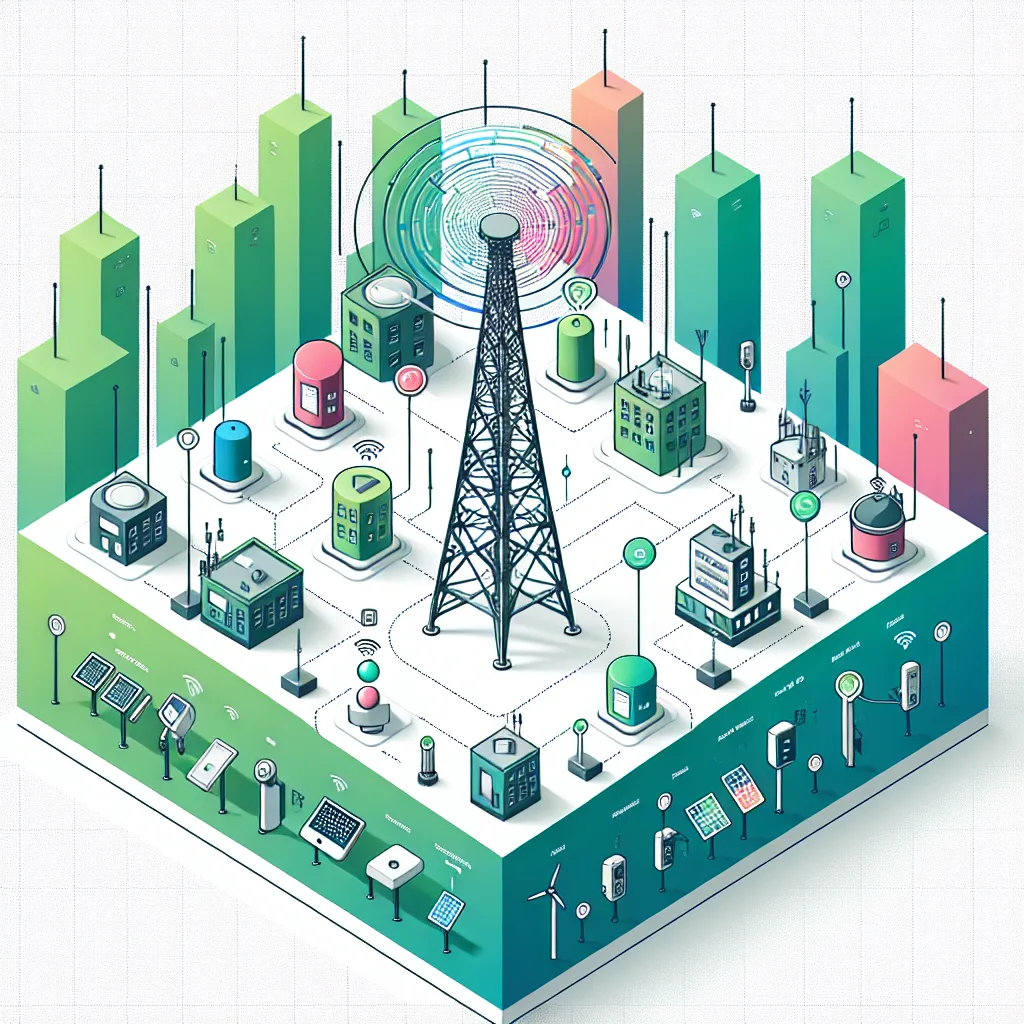
NB-IoT deployment involves several architectural considerations. These impact network performance, coverage, and capacity. Understanding these factors is essential for successful nb-iot deployment across different scenarios.
Deployment Modes
NB-IoT supports three distinct deployment modes. Each offers different advantages based on operator requirements and spectrum availability. In-band deployment utilizes resource blocks within existing LTE carriers. This enables rapid deployment without additional spectrum allocation.
Guard-band deployment places NB-IoT in the unused guard bands of existing LTE carriers. This provides efficient spectrum utilization while maintaining separation from LTE traffic. Standalone deployment uses dedicated spectrum. This offers maximum flexibility and performance optimization.
Network Core Integration
NB-IoT integrates with existing LTE network infrastructure through the Evolved Packet Core (EPC). This minimizes deployment costs and complexity. The technology supports both Control Plane (CP) and User Plane (UP) data transmission methods. This allows operators to optimize for different application requirements.
Control Plane optimization reduces signaling overhead for small data transmissions. User Plane optimization supports applications requiring higher data throughput or more complex communication patterns.
Coverage Planning and Optimization
Effective nb-iot network planning requires careful consideration of coverage requirements, device density, and interference management. The technology's extended coverage capabilities enable larger cell sizes compared to traditional cellular technologies. This potentially reduces infrastructure requirements.
Coverage enhancement techniques include repetition mechanisms, robust channel coding, and adaptive power control. These ensure reliable connectivity across diverse deployment scenarios. Network optimization involves balancing coverage, capacity, and power consumption based on specific application requirements.
5G Integration and Future of NB-IoT
The evolution toward 5g networks presents both opportunities and considerations for existing NB-IoT deployments. 5g specifications include native support for NB-IoT. This ensures backward compatibility while enabling enhanced capabilities.
5G NB-IoT Enhancements
5g integration brings several improvements to NB-IoT capabilities. These include reduced latency, enhanced positioning accuracy, and improved power efficiency. Network slicing capabilities enable operators to create dedicated NB-IoT slices optimized for specific application requirements.
Edge computing integration allows NB-IoT data processing closer to devices. This reduces latency and bandwidth requirements while enabling real-time analytics capabilities. This integration supports more sophisticated iot application scenarios requiring rapid response times.
Migration Strategies
Organizations with existing NB-IoT deployments can migrate to 5g networks gradually. They maintain service continuity while gaining access to enhanced features. The backward compatibility ensures existing nb-iot devices continue operating without modification during network upgrades.
Future device deployments can leverage enhanced 5g NB-IoT features while maintaining interoperability with legacy networks. This provides flexibility during transition periods.
Implementation Considerations for NB-IoT Solutions
Successful nb-iot solution implementation requires careful planning across device selection, network integration, and application development. Understanding these considerations helps organizations maximize the benefits of nb-iot technologies while avoiding common pitfalls.
Device Selection and Integration
Selecting appropriate NB-IoT devices involves evaluating power consumption, form factor, environmental requirements, and certification status. Devices must support the specific frequency band used by the target network operator. They must also comply with regulatory requirements in the deployment region.
Device integration considerations include antenna design, power management, and data processing capabilities. Edge processing capabilities can reduce data transmission requirements and extend battery life. They do this by performing local analysis and transmitting only relevant information.
Security and Data Management
NB-IoT implementations must address security requirements throughout the device lifecycle. This includes initial provisioning through data transmission and device management. The technology supports standard LTE security mechanisms. These include mutual authentication and encryption.
Data management strategies should account for the intermittent connectivity nature of NB-IoT devices. They should implement store-and-forward mechanisms and handle offline periods gracefully. Cloud integration platforms can provide unified management across large numbers of devices. They support various data formats and communication patterns.
Scalability and Future Growth
Successful nb-iot deployments plan for scalability from initial pilot projects to full-scale implementations. This planning includes evaluating network capacity, data management infrastructure, and support systems. These must be capable of handling growth in the number of devices and data volume.
Future-proofing considerations include selecting devices and platforms that support firmware updates and protocol enhancements. This ensures compatibility with evolving nb-iot ecosystem standards and operator network upgrades.
The deployment of nb-iot across global networks has transformed how industries approach IoT connectivity. Unlike traditional connectivity solutions that consume significant battery power, nb-iot offering extends device lifespans to over a decade with minimal maintenance. This advancement enables a wide range of iot applications from simple sensors to complex industrial monitoring systems.
NB-IoT provides enhanced coverage penetration, massive device connectivity, and ultra-low power consumption. These characteristics make it ideal for IoT devices and services that operate in challenging environments. Examples include underground meters or remote agricultural sensors. The technology supports up to 100,000 connected devices per cell. This addresses the needs of iot devices across diverse industrial sectors.
Applications and Use Cases
Applications of nb-iot span multiple industries. Smart metering, asset tracking, and environmental monitoring lead adoption rates. The technology excels in iot applications that require infrequent data transmission and extended battery life. Real-world nb-iot applications with trackers demonstrate effectiveness in logistics. Companies monitor cargo containers across international shipping routes.
The widespread adoption of nb-iot stems from its ability to support a wide range of iot devices without requiring complex infrastructure changes. Applications of nb-iot technology include smart parking sensors, water leak detectors, and livestock monitoring systems. These transmit small data packets periodically. These implementations showcase how nb-iot is designed to handle massive IoT deployments efficiently.
Network Architecture and Global Connectivity
Communication between nb-iot devices operates through existing LTE base stations. This eliminates the need for separate network infrastructure. Roaming agreements for nb-iot enable seamless connectivity across different countries and operators. This makes it suitable for international asset tracking. This standardized approach positions NB-IoT among leading lpwan technologies for iot deployments worldwide.
The technology accommodates a wide range of iot applications while maintaining network efficiency through optimized signaling protocols. Modern implementations support a range of new iot devices that leverage cloud integration and edge computing capabilities. Service providers can now offer comprehensive devices and services packages. These include connectivity, device management, and data analytics platforms.
NB-IoT is best suited for applications requiring infrequent data transmission and extended battery life. Examples include smart water meters and environmental sensors. The technology operates in licensed spectrum bands. This provides reliable coverage and interference protection that many IoT deployments demand. This spectrum efficiency allows network operators to support thousands of devices per cell tower without compromising performance.
The architecture of NB-IoT eliminates the need for complex gateway infrastructure. This makes NB-IoT a cost-effective solution for large-scale deployments. Devices connect directly to existing LTE base stations through simplified protocols. These reduce power consumption and hardware complexity. This direct cellular connection ensures consistent performance across urban and rural environments.
Power Consumption and Battery Life Optimization
NB-IoT is engineered with advanced power-saving modes. These extend device battery life up to 10 years for typical use cases. The Power Saving Mode (PSM) allows devices to enter deep sleep states between transmissions. Extended Discontinuous Reception (eDRX) cycles optimize network listening periods. These features enable many IoT devices to operate autonomously for extended periods without maintenance.
The protocol stack designed for IoT applications minimizes processing overhead and reduces wake-up times. This compares favorably to traditional cellular technologies. Devices can transmit small data packets efficiently. They use techniques like Non-Anchor Carrier (NAC) scheduling and repetition coding for improved coverage. This optimization ensures that many IoT sensors and monitoring devices can function reliably in challenging RF environments. They maintain minimal power draw.
Frequently Asked Questions
What makes NB-IoT different from traditional cellular technologies?
NB-IoT uses narrow bandwidth (200 kHz) and is optimized for low power consumption and extended coverage. Unlike traditional cellular technologies designed for high-speed data, NB-IoT focuses on connecting massive numbers of devices. These devices transmit small amounts of data infrequently. It achieves 10-year battery life and supports up to 50,000 devices per base station.
Can NB-IoT devices work in areas with poor cellular coverage?
Yes, NB-IoT provides extended coverage up to 20 dB better than traditional cellular technologies. The narrow bandwidth and repetition mechanisms enable connectivity in challenging environments. These include basements, underground locations, and rural areas where standard cellular signals struggle to penetrate.
How does NB-IoT compare to other IoT connectivity options like LoRaWAN?
NB-IoT operates in licensed spectrum providing guaranteed quality of service. LoRaWAN uses unlicensed bands. NB-IoT offers better coverage and security through cellular infrastructure, but requires subscription fees. The choice depends on specific use case requirements for coverage, reliability, and cost structure.
What types of applications are best suited for NB-IoT deployment?
NB-IoT excels in applications requiring long battery life, extended coverage, and infrequent data transmission. Primary use cases include smart metering, asset tracking, environmental monitoring, and smart city applications. Industrial IoT applications benefit from the technology's ability to connect devices in challenging RF environments.
How does NB-IoT integration with 5G networks affect existing deployments?
5G networks provide native NB-IoT support with backward compatibility. This ensures existing devices continue operating while gaining access to enhanced features like reduced latency and improved positioning. The integration enables gradual migration strategies and future-proofs current NB-IoT investments.
What are the power consumption advantages of NB-IoT technologies?
NB-IoT achieves ultra-low power consumption through Power Saving Mode (PSM) and extended Discontinuous Reception (eDRX). These mechanisms allow devices to remain dormant for extended periods while maintaining network registration. This enables battery lives exceeding 10 years in typical IoT application scenarios with infrequent data transmission.
Can NB-IoT support mobile applications or is it limited to stationary devices?
NB-IoT provides limited mobility support. It's optimized for stationary or slowly moving devices. For applications requiring full mobility with seamless handover, LTE-M represents a better choice. NB-IoT works well for tracking applications where devices move occasionally between locations but don't require continuous mobility support.
What makes NB-IoT suitable for different IoT applications?
Applications of nb-iot technology excel in scenarios requiring long battery life and deep indoor penetration. The technology supports a wide range of iot applications from simple temperature sensors to complex industrial monitoring systems. Its low power consumption and enhanced coverage make it ideal for devices that need to operate autonomously for years.
How does NB-IoT deployment differ from other IoT networks?
The deployment of nb-iot leverages existing LTE infrastructure. This reduces implementation costs and complexity compared to other iot networks. This approach enables operators to quickly scale their nb-iot offering without building separate network infrastructure. The standardized deployment model ensures compatibility across different regions and carriers.
Which devices and services benefit most from NB-IoT connectivity?
IoT devices and services that require minimal data transmission and maximum battery efficiency gain the most from NB-IoT technology. Applications include smart meters, environmental sensors, and asset trackers. These need reliable connectivity in challenging locations. The needs of iot devices for extended operational life align perfectly with NB-IoT's ultra-low power design.
What are the key features that distinguish NB-IoT from other LPWAN technologies?
NB-IoT includes superior indoor penetration, massive device capacity, and standardized global roaming capabilities. Unlike other lpwan technologies for iot, NB-IoT operates in licensed spectrum. This ensures reliable performance and quality of service. Communication between nb-iot devices benefits from carrier-grade security and network management that enterprise applications require.
What types of IoT applications work best with NB-IoT?
NB-IoT is best deployed for applications requiring low data rates, infrequent communication, and long battery life. Examples include smart meters, asset tracking, and environmental monitoring. Many IoT devices in agriculture, utilities, and smart city infrastructure benefit from NB-IoT's deep coverage penetration and cost-effective connectivity. The technology excels in scenarios where devices transmit small amounts of data periodically rather than requiring constant communication.
How does NB-IoT differ from other cellular IoT technologies?
NB-IoT is different because of its simplified protocol stack and reduced bandwidth requirements. This compares to LTE-M or traditional cellular connections. The technology was specifically designed for IoT use cases. It eliminates unnecessary features like voice support and high-speed data capabilities. This streamlined approach makes NB-IoT more power-efficient and cost-effective for basic sensor and monitoring applications.
Can existing cellular infrastructure support NB-IoT deployments?
Many IoT deployments can leverage existing LTE infrastructure through software upgrades and minor hardware modifications to base stations. NB-IoT operates within existing licensed spectrum allocations. This allows carriers to deploy the technology without acquiring new frequency bands. This compatibility reduces deployment costs and accelerates network rollout timelines for IoT connectivity solutions.
NB-IoT has established itself as the cornerstone technology for massive IoT deployments. These require reliable connectivity with minimal power consumption. Organizations planning iot connectivity solutions should evaluate NB-IoT for applications requiring extended battery life, wide area coverage, and the ability to connect large numbers of devices efficiently. The technology's continued evolution and strong ecosystem support position NB-IoT as a crucial enabler for the expanding IoT landscape across industries worldwide.
Related Articles
Satellite IoT Connectivity: M2M Beyond Cellular Coverage
Satellite IoT connectivity changes how m2m communication works. It extends IoT devices beyond regular network limits. When cellular coverage fails in re...
Wi-Fi vs Cellular for IoT: When to Use Each
Choosing between wi-fi vs cellular for iot when to use each option is a critical decision. It impacts deployment success, operating costs, and device pe...
RFID Technology in M2M: How It Works
RFID technology in M2M systems changes how machines communicate and exchange data. Radio frequency identification enables automated tracking and data co...