
In this article
- ZigBee provides low power consumption and mesh network capabilities ideal for specific M2M applications
- Primary use cases include smart home automation, building automation, and industrial sensor networks
- Major limitations include limited range, low data rate, and potential interference on the 2.4 GHz frequency
- ZigBee competes with WiFi, Bluetooth, and Z-Wave in the short-range wireless connectivity market
- Understanding these trade-offs is crucial for selecting the right protocol for your IoT application
- ZigBee technology works best in scenarios requiring battery-powered devices and reliable mesh connectivity
Table of Contents
- Understanding ZigBee Protocol Fundamentals
- Key ZigBee Use Cases in M2M Applications
- ZigBee Network Advantages for IoT Connectivity
- Major Limitations of ZigBee Technology
- ZigBee vs Competing Wireless Protocols
- Implementation Considerations and Best Practices
- Frequently Asked Questions
Understanding ZigBee Protocol Fundamentals
ZigBee works as a low-power wireless network protocol. It was built for IoT device communication. Based on the IEEE 802.15.4 standard, ZigBee uses the 2.4 GHz frequency band worldwide. Some regions have other frequencies too. The protocol makes a mesh network where each ZigBee device can pass messages to others. This extends network coverage beyond what single nodes can reach. The ZigBee protocol has multiple layers. Each layer does different jobs. The network layer handles routing and mesh functions. The application layer manages device profiles and communication standards. This setup helps devices from different makers work together. It also keeps the low power use needed for battery-powered IoT devices.Technical Specifications
ZigBee technology supports data rates up to 250 kbps on 2.4 GHz. But actual speed changes based on network conditions and device setup. The protocol uses AES-128 encryption for security. This gives good protection for most IoT applications without heavy overhead. Each ZigBee network can support thousands of nodes. Coordinator devices manage network setup and upkeep. End devices can sleep most of the time. They only wake up to send data or get commands. This helps keep power use very low.Key ZigBee Use Cases in M2M Applications

Industrial IoT Applications
Manufacturing environments benefit from ZigBee's interference resistance and mesh networking. They use it for machine monitoring and predictive maintenance systems. The protocol handles the tough RF environment of industrial facilities better than some other options. But proper network planning is still crucial for best performance. Agricultural IoT deployments use ZigBee networks for soil moisture monitoring, livestock tracking, and environmental sensing. The low power use enables sensor setups in remote locations. This helps where frequent battery replacement would be hard.ZigBee Network Advantages for IoT Connectivity
ZigBee's main advantage is its very low power consumption. IoT devices using proper sleep mode management can run for years on battery power. This makes ZigBee ideal for applications where wired power connections are not practical. This low-power feature comes from the protocol's design. It minimizes active radio time and optimizes sleep cycles. Mesh network functionality provides strong connectivity. It automatically routes around failed nodes or obstacles. Unlike point-to-point wireless connections, a ZigBee network becomes more reliable as you add devices. Each new node can serve as a repeater for others. This self-healing ability reduces maintenance needs and improves overall system reliability.Cost and Complexity Benefits
ZigBee offers lower setup costs compared to cellular or WiFi solutions for many applications. The protocol needs less complex hardware and simpler network infrastructure. This makes it attractive for cost-sensitive deployments. Also, the standardized profiles ensure compatibility across different manufacturers. This reduces integration complexity. The ecosystem around ZigBee includes many chip suppliers and module manufacturers. This provides design flexibility and competitive pricing. This mature supply chain makes ZigBee a reliable choice for products needing long-term availability and support.Major Limitations of ZigBee Technology
Range limitations are the biggest constraint of ZigBee technology. Individual devices typically communicate well over 10-100 meters in open space. Walls and obstacles dramatically reduce this limited range. While mesh networking can extend coverage, this needs careful network planning. You also need enough device density to maintain connectivity. The 2.4 GHz frequency band gets crowded in many environments. This is especially true where WiFi networks, Bluetooth devices, and microwave ovens operate. This interference can hurt ZigBee network performance and reliability. This is especially bad in dense urban areas or facilities with lots of wireless infrastructure.Data Rate and Bandwidth Constraints
ZigBee's low data rate of 250 kbps maximum becomes a bottleneck. This affects applications needing high-throughput data transmission. Video streaming, large file transfers, and real-time applications needing substantial bandwidth cannot use ZigBee connectivity well. This limitation restricts ZigBee to simple sensor data, control commands, and status updates. Network scalability presents challenges in very large deployments. While ZigBee networks theoretically support thousands of devices, practical setups often have performance problems. This happens with hundreds of active nodes, especially when traffic patterns create network congestion.ZigBee vs Competing Wireless Protocols
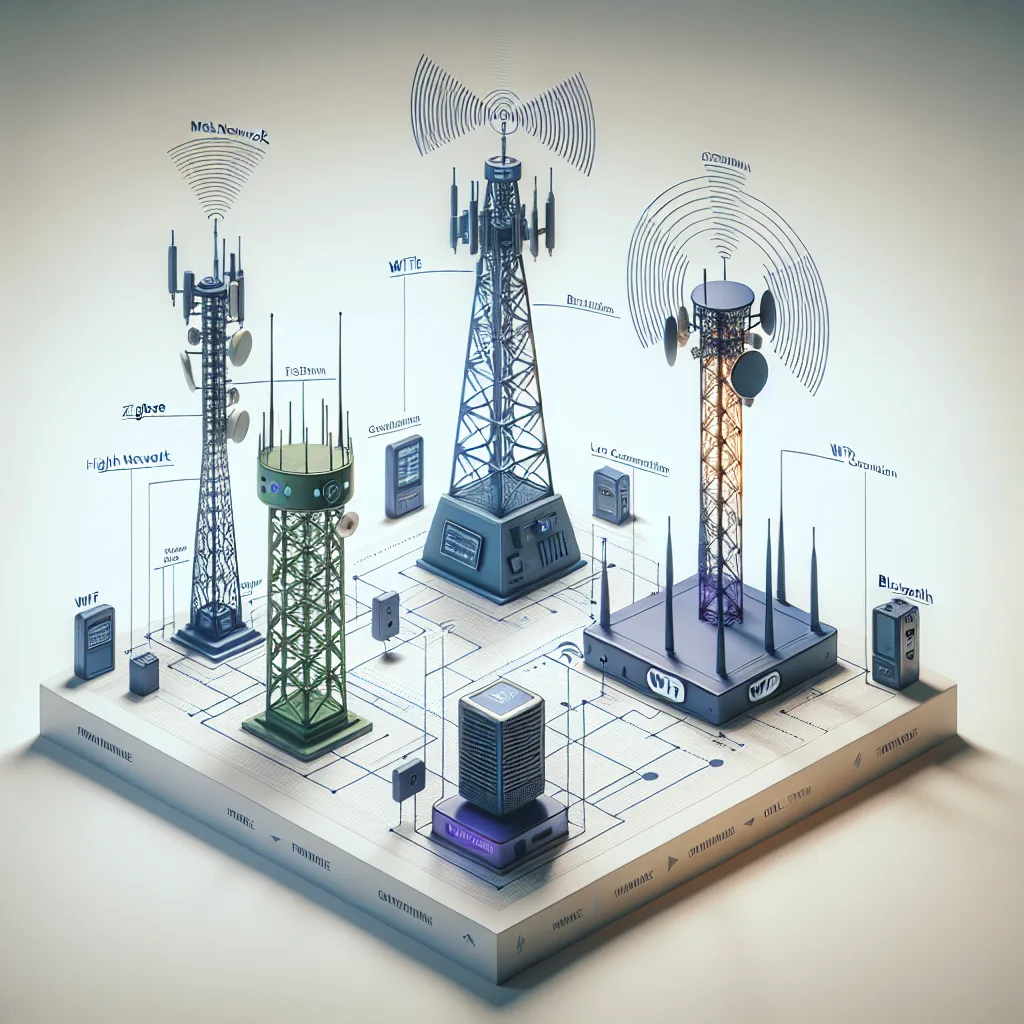
Bluetooth Comparison
Bluetooth and Wi-Fi serve different market segments than ZigBee. Bluetooth focuses on personal area networks and device pairing rather than large-scale IoT deployments. Bluetooth Low Energy offers similar power consumption but lacks ZigBee's mesh networking capabilities. This limits its usefulness in building-scale applications. The emergence of WiFi 6 and other advanced wireless technologies continues to pressure ZigBee in some applications. This is especially true where higher data rates justify the increased power consumption and complexity.Implementation Considerations and Best Practices
Successful ZigBee setups need careful network planning. This optimizes topology and ensures good coverage. Site surveys help identify potential interference sources. They also determine optimal device placement for reliable connectivity. Understanding the physical environment and RF propagation characteristics prevents many common deployment issues. Security configuration deserves special attention. Default ZigBee setups may not enable all available encryption and authentication features. Proper key management and network segmentation help protect against unauthorized access. This maintains the low power consumption advantages of the protocol. Device selection impacts network performance significantly. Understanding LPWAN alternatives helps engineers choose the most appropriate technology for their specific requirements. This includes whether ZigBee or other low-power options work best. Integration with existing systems needs careful consideration of M2M communication architectures and data flow requirements. ZigBee works best when integrated thoughtfully into broader IoT solutions rather than as an isolated network.ZigBee Network Architectures and IoT Integration
ZigBee is a wireless communication protocol that works in short range environments. This makes it ideal for creating strong smart home solutions and industrial M2M networks. Unlike traditional star topology configurations, ZigBee supports mesh networking. This lets devices with ZigBee capabilities communicate through multiple pathways. This enhances network reliability. This architecture proves particularly valuable when connecting smart devices across distributed IoT protocols implementations.
ZigBee excels in power efficiency and network scalability for battery-operated sensors compared to WiFi and other wireless standards in the internet of things landscape. Manufacturing facilities deploy ZigBee networks to connect hundreds of sensors and actuators. This doesn't need the infrastructure demands required by Wi-Fi or Bluetooth solutions.
Device Management and Ecosystem Compatibility
Effective device management within a smart home ecosystem needs careful consideration of protocol compatibility and network performance. ZigBee's superior ability to maintain stable connections between local device networks and central controllers makes it preferable to Wi-Fi in many scenarios. Security cameras, lighting controls, and environmental sensors integrate seamlessly through ZigBee's standardized communication framework.
ZigBee's effectiveness in devices and applications ranges from industrial automation to residential energy management. The IoT ecosystem benefits from ZigBee's mesh networking capabilities. These allow smart devices to maintain connectivity even when individual network nodes fail. However, ZigBee networks need dedicated coordinators. They cannot directly interface with Wi-Fi and Bluetooth devices without protocol bridges.
ZigBee's limitations become apparent in applications needing high-bandwidth data transmission or direct internet connectivity. Unlike WiFi-enabled devices that connect directly to cloud services, ZigBee networks depend on gateway devices. These bridge local device communications with external networks. This dependency creates potential bottlenecks in large-scale M2M deployments where real-time data processing and cloud integration are critical requirements.
Smart Grid Implementation Challenges
ZigBee's mesh networking capabilities make it attractive for smart grid deployments. Here, interconnected devices must communicate reliably across extended areas. Utility companies use ZigBee to connect smart meters, distribution automation equipment, and demand response systems within neighborhoods. However, the protocol's limited data throughput can restrict real-time monitoring capabilities for high-frequency power quality measurements.
Industrial automation environments present mixed results for ZigBee implementation in M2M scenarios. The protocol excels in applications needing low-power sensor networks for temperature, humidity, and pressure monitoring across manufacturing facilities. ZigBee's self-healing mesh topology automatically routes data around failed nodes. This maintains system reliability even when individual sensors experience hardware failures.
Range Limitations in Outdoor Deployments
ZigBee's outdoor range limitations become apparent in large-scale M2M deployments such as agricultural monitoring or oil field instrumentation. While indoor applications typically achieve 10-20 meter ranges between devices, outdoor implementations may need additional repeater nodes to maintain reliable connectivity across expansive areas. The 2.4 GHz frequency band also faces interference from WiFi networks and other wireless devices in populated areas.
Battery life optimization remains a critical advantage for ZigBee-based M2M systems. This is especially true in remote sensing applications where device maintenance proves challenging. ZigBee end devices can operate for years on a single battery when properly configured for intermittent data transmission. This energy efficiency makes ZigBee suitable for environmental monitoring networks where replacing batteries frequently would be impractical or costly.
Frequently Asked Questions
What are the main advantages and disadvantages of ZigBee in IoT applications?
ZigBee offers exceptional low power consumption, mesh network reliability, and cost-effective implementation for sensor networks and automation systems. However, it suffers from limited range, low data rate restrictions, and potential 2.4 GHz interference issues that can impact network performance in congested environments.
When should you choose ZigBee over WiFi or Bluetooth for IoT connectivity?
Choose ZigBee when your IoT application needs battery-powered devices operating for years without replacement. Also choose it for mesh network coverage across buildings and simple sensor data transmission. WiFi works better for high-bandwidth applications. Bluetooth suits personal area network scenarios better than building-scale deployments.
How does ZigBee network topology affect performance and reliability?
ZigBee mesh network topology improves reliability by providing multiple communication paths between devices. But network performance can degrade with too many hops or inadequate device density. Proper network planning ensures optimal connectivity while maintaining the low power consumption benefits of ZigBee technology.
What compatibility issues exist between ZigBee devices from different manufacturers?
ZigBee profiles and the ZigBee Alliance certification help ensure compatibility between devices from different manufacturers. But implementation variations can still cause integration challenges. Testing device interoperability before deployment prevents compatibility issues in production environments.
How do ZigBee versions affect use case suitability and device compatibility?
Different ZigBee versions offer varying features and capabilities. Newer versions provide improved security, better mesh networking, and enhanced power management. However, older IoT devices may need specific ZigBee versions. This affects ecosystem compatibility and feature availability in mixed deployments.
What are the security implications of using ZigBee in industrial IoT applications?
ZigBee implements AES-128 encryption and authentication mechanisms suitable for most IoT applications. But proper network configuration and key management are needed. Industrial environments may need additional security layers and network segmentation to protect critical systems from potential wireless vulnerabilities.
How does ZigBee compare to other IoT technologies for M2M applications?
ZigBee is a wireless communication protocol optimized for low-power, mesh networking applications within IoT technologies. Unlike Wi-Fi or Bluetooth, ZigBee excels in short range environments where multiple smart devices need to communicate reliably while preserving battery life. The protocol's mesh architecture enables self-healing networks that maintain connectivity even when individual nodes fail.
What are the key advantages of using ZigBee in smart home solutions?
ZigBee in smart home ecosystems provides exceptional power efficiency, mesh networking capabilities, and standardized device interoperability. ZigBee enables smart devices to operate for years on battery power while maintaining reliable communication throughout the home. This makes ZigBee ideal for sensors, door locks, and other devices and applications where frequent battery replacement would be impractical.
Can ZigBee networks integrate with existing WiFi and Bluetooth devices?
ZigBee networks cannot directly communicate with WiFi and ZigBee devices or Wi-Fi and Bluetooth systems without protocol bridges or gateway devices. Effective device management needs dedicated hub devices that translate between ZigBee and other IoT protocols. While this adds complexity, it allows ZigBee to maintain its power efficiency advantages while still participating in broader IoT ecosystem integrations.
What specific use cases make ZigBee preferable to star topology networks?
ZigBee's mesh networking surpasses traditional star topology configurations in applications needing distributed sensor networks and redundant communication pathways. Security cameras, environmental monitoring systems, and industrial automation benefit from ZigBee's self-healing mesh architecture. Local device networks using ZigBee maintain functionality even when central controllers experience temporary failures. This is unlike rigid star topology systems.
How does ZigBee handle interference in crowded wireless environments?
ZigBee incorporates frequency agility mechanisms that allow networks to automatically switch channels when interference is detected on the 2.4 GHz band. The protocol uses DSSS (Direct Sequence Spread Spectrum) modulation to improve resistance to interference from other wireless devices. However, dense WiFi environments can still impact ZigBee performance. This requires careful channel planning for optimal M2M communication.
What are the typical power consumption levels for ZigBee M2M devices?
ZigBee end devices consume as little as 1-10 microamps in sleep mode. This enables multi-year battery operation in many M2M applications. Active transmission power consumption ranges from 30-60 milliamps depending on the specific chipset and transmission power settings. Coordinator and router devices need continuous power due to their always-on networking responsibilities.
Can ZigBee networks scale to support thousands of M2M devices?
ZigBee networks theoretically support up to 65,000 devices per coordinator. But practical limitations reduce this number significantly. Network performance degrades as device count increases. This happens due to increased collision probability and routing overhead. Most successful large-scale M2M deployments segment ZigBee networks into smaller clusters of 100-500 devices each to maintain reliable communication.
What security measures does ZigBee provide for M2M communications?
ZigBee implements AES-128 encryption at both the network and application layers to protect M2M data transmission. The protocol includes key management features for secure device joining. It supports trust center functionality for centralized security administration. However, some ZigBee implementations have experienced security vulnerabilities. This requires regular firmware updates and proper key management practices.
ZigBee continues to serve specific niches in M2M communication despite competition from newer wireless technologies. Success with ZigBee depends on matching its strengths to appropriate use cases. These strengths include low power consumption, mesh networking, and cost-effectiveness. You also need to work around its limitations. Understanding the broader M2M and IoT landscape helps engineers make informed decisions about when ZigBee provides the best solution for their connectivity requirements. The key lies in thorough requirements analysis and realistic assessment of ZigBee's capabilities against project needs.Related Articles
Satellite IoT Connectivity: M2M Beyond Cellular Coverage
Satellite IoT connectivity changes how m2m communication works. It extends IoT devices beyond regular network limits. When cellular coverage fails in re...
Wi-Fi vs Cellular for IoT: When to Use Each
Choosing between wi-fi vs cellular for iot when to use each option is a critical decision. It impacts deployment success, operating costs, and device pe...
RFID Technology in M2M: How It Works
RFID technology in M2M systems changes how machines communicate and exchange data. Radio frequency identification enables automated tracking and data co...